Carrying Love Forward

I remember the first time I realized that letting go could open up a whole new world to me.

It was more than three years after my husband, Carl, died. 

I had spent those years trying to preserve a life that no longer existed. It wasn’t working. Nothing about my life was the same and never would be again. 

After I came out of the fog of profound loss, I realized that I had to make changes. I couldn’t spend the rest of my life like this. Carl wouldn’t want that for me. 

But how was I to move on? That was the question, and it didn’t come to me all at once. 

I was afraid of making big decisions because I didn’t want to have regrets later. So I took baby steps.

Always a writer at heart, I began writing down my family stories to leave behind for my children and grandchildren. Those first attempts have grown into this blog and a couple of other projects I am still working on. 

I began downsizing my home. A lot of things accumulate during fifty-two years of marriage, even if you periodically clear out the excess. This proved to be cathartic for me. I realized it wasn’t about leaving the past behind. It was about making room for the future. 

I reconnected with old friends and began to enjoy life again. 

There were pleasant evenings on my screened porch again. I enjoyed watching the sun set and listening to the birds as they quieted for the night, with a distant train whistle and bullfrogs from a nearby river filling the quiet the birds left behind.

My community was alive. I had missed that. Carl and I used to sit on the porch together, and for almost four years after he passed, I just couldn’t. Until the day I decided to live again.  

Moving forward felt like betrayal, at first—until I realized that I wasn’t leaving Carl behind. I was learning to carry his love forward. He would always be part of my life, even though he was no longer here physically. 

But betrayal? No. Just no. Building a new life isn’t a betrayal. 

It is a tribute to our love and the life we built together. To a man I loved beyond measure. To fifty-two years of marriage that gave me everything in life that I could have ever asked for. Nothing could ever erase that—or our love for each other.

At first, I thought this post was going to be about letting go. But I soon discovered it isn’t. Not at all. I am not leaving Carl or our love behind. I have just learned how to carry it forward.
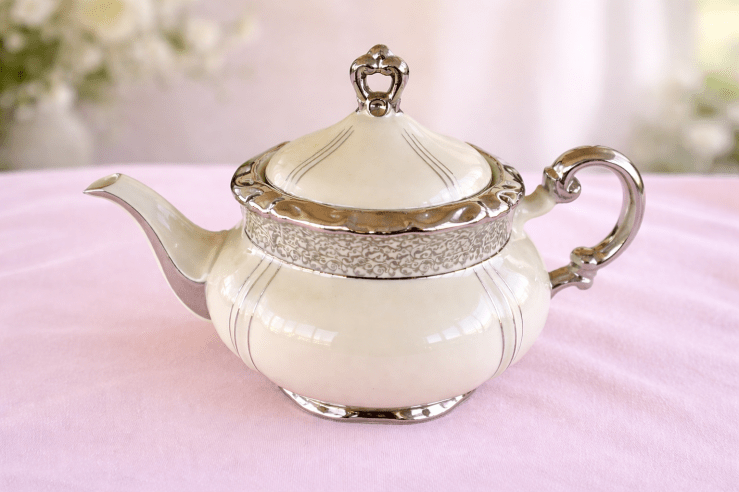
The China He Carried Home


A Young Soldier, a Promise, and a Truckload of Coal

Dad served in the European theater in World War II.

For a time, he was stationed in the Black Forest in Germany.

One day, while off duty, he discovered a small china shop. Inside, an elderly proprietor made and sold delicate white dishes, complete with tea and coffee services. Dad admired them. More than that — he already knew exactly who they were for.

He asked what it would cost for two full sets. One for his mother. One for the woman he hoped to marry someday.

The old man shook his head sadly. He had no coal to fire his kiln. Wartime shortages made it impossible.

Dad asked a simple question.

“If I bring you the coal, will you make them?”

The old man agreed. A deal was struck.

Along with his other duties, Dad sometimes drove officers from place to place. That meant he had access to the motor pool. He put his plan into motion.

Later, with a grin, Dad told me he had “borrowed an Army truck and liberated a truckload of Army coal.”

Then he laughed — because he always did at that part.

Not long afterward, two beautiful sets of white china with silver trim were finished.

One went to his mother.

Two years later, when he married mine, he placed the second set in her hands.

Today, that china sits in my care.

A quiet reminder of love, war, and a young soldier who knew exactly what mattered.

A Quiet Grief

When my husband died, I died too. Not in the same sense, of course, but the life and love I had known for 52 years were gone in an instant. I was lost. I didn’t know what to do or how to go on without him. And yet I did, whether I wanted to or not.

Those first days were surreal. I didn’t know what to do with myself, and I couldn’t get away from the pain. Even brief distractions only reminded me of what I had lost.

Days turned into weeks, and weeks turned into months. Then the firsts began. The first Thanksgiving without him. The first Christmas without him. His first birthday in Heaven. 

I had sweet memories of our lives together and returned to them often, picturing where we were and what we were doing. Sometimes, they were how I soothed myself to sleep.

I thought the second year might ease a little. It did in some respects, but there were the seconds — second-year celebrations marked by the empty chair at the table and his recliner no one would sit in.

During this time I stopped doing so many things that had once been enjoyable for me. Carl and I had a multipurpose basement that was part storage and part recreation. His computer sat in one side of the basement, and my paper crafting area sat in the opposite side. He used to go downstairs and peruse social media while I made greeting cards and other paper crafts. When he died, I lost all interest in paper crafting. 

It was during the summer of the third year that I had a sudden revelation that shocked me. I realized that I had been suffering a quiet depression—quiet because it didn’t look dramatic or urgent. It consisted mostly of apathy. I lost interest in nearly everything in my life except my children. I gave up my driver’s license for several reasons and stopped going out except for doctor visits and food. 

Looking back, I can see that the holidays during this third year were still hard—but they landed somewhat softer. His birthday still lies ahead. I haven’t forgotten him. I never will.

Once I realized that, things began to change. I had been in coasting mode with my health, so I took charge of it and made improvements that needed to happen.

It was also during this time that I rediscovered my love for writing. I wanted to start a blog, and what you see here is the result of that.

As they always do, the holidays came around again. I opted not to spend time with my family for Thanksgiving this year. I treated myself gently and spent the day in bed, not from depression, but as a kindness to myself to rest and recharge. I woke up that afternoon feeling good, really good, for the first time in years. I don’t know where it came from, only that it felt like part of my healing—and I was grateful for it.

The Patched Dishcloth

One day, long after I was married and had children of my own, I was at Mom’s house, cooking and doing dishes as we prepared for a family dinner. I reached into the drawer where she kept her dishcloths and towels. A scrap of multicolored terrycloth with white stitching caught my eye, and I reached in to pull it out of the drawer. 

I immediately started laughing. Turning without comment, I held it up in front of her. She recognized why I was laughing, then she began to laugh along with me.

What I held in my hands was a patched dishcloth. It was a solid piece of fabric, clearly made from two different cloths — one pink, one lavender — stitched together with white thread to form something new. It represented her life in so many ways — and how she cared for her family.

Both of my parents’ lives were shaped by the Great Depression and the years of World War II where they learned the value of taking care of what they owned and mending what was broken. In this case, a torn dishcloth, insignificant by itself, was made into something useful once again. 

I thought of the other things she mended without ceremony. Socks turned inside out and mended as she watched television with the family, hems let down or taken up as we grew, small tears stitched before they became big ones. She crocheted doilies to decorate our home, kept the house tidy, and somehow made ordinary days feel cared for. None of it was showy. It was simply how she cared for us. 

Everything that she did in life was to see that we were warm and fed and had everything that we needed and almost everything that we wanted. As a child, I may not have appreciated that fully. As an adult and the mother of four, I understood precisely where her heart was and what it takes to make a home.

After Mom passed away, I took that patched dishcloth and put it away as a cherished memento — not just of her life, but of the quiet, ordinary care she gave us every day.