The Day Dad Took a Chicken to Lunch

In the 1950s, Dad had another business besides farming. He ran three milk routes. Back then, farmers filled large metal cans with milk, and Dad hauled them to the creamery where the milk was turned into cheese.

Because there were multiple routes, he employed hired hands. Dad drove one route, the hired men drove the others, and when they were short a driver, Mom filled in — on top of working at the hospital and cooking lunch when she could.

In this particular instance, it was summer and Dad and the men were putting up hay. Mom had to work, so Dad decided to take the hands into town for lunch. When they headed toward Dad’s pickup, they found one of our free-range hens settled comfortably on the muddy running board.
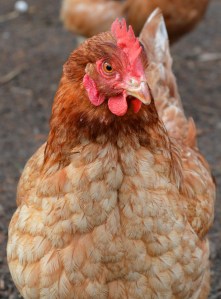

I never knew her real name. In my mind, she will always be Henrietta.

Dad tried to shoo her away. She objected loudly and refused to move.

He laughed, shrugged, and figured she’d hop down once the truck started rolling.

She didn’t.

To his surprise, that hen rode the entire four miles into town, feathers wind-tossed, claws gripping the mud-caked metal like a seasoned traveler who had purchased a non-refundable ticket.

Dad assumed she’d wander off while they ate.

She did not.

When he finally pulled back into our driveway after lunch, there she still sat — dignified, windblown, and entirely unbothered by the journey.

The men laughed. Dad shook his head. Life went on.

And here’s how the story ends:

Dad said that hen refused to climb down until she was good and ready. And when she finally did, he discovered she’d laid an egg right there on her perch.

Which, if you ask me, explains everything.

Some ladies simply do not vacate their seat until their business is complete.

The Bunny’s Tail Fell Off!

Although Mom grew up in a rural area, she had never lived on a farm before marrying Dad.

Mom was determined to be a good farm wife. She worked hard, kept us fed and clothed, kept the house clean, nurtured us in every way a mother should, and occasionally helped out on the farm.

Sometimes, especially when Dad was haying, she drove the tractor so a hired hand could help Dad on the ground with the square bales.

One day, she was out by the rabbit pens. I’m not sure what she was doing, but I suspect she was feeding them. Much to her horror, Dad’s prize buck made an escape.

She lunged for him, catching hold just as he started to disappear under the barn — by the tail. She held on tight and tried to pull him back out.

To her horror, the rabbit continued forward and vanished beneath the barn.

That left her standing there — with his tail in her hand and no bunny attached to it.

Later, when quietly explaining to my father what had happened to his rabbit, she said,“I didn’t know their tails would come off.”

“Their tails are delicate, and they will come off if you pull on them,” Dad told her.

I wasn’t privy to that conversation, but it’s not hard to imagine Dad’s laughter when he heard the story.

The Peanut Man

On the days Mom had to work at the hospital, I usually spent the day with Dad. Some of my fondest memories revolve around the times he took me with him to the Sale Barn. 

I don’t know if it had a name, but we always called it the Sale Barn, where farmers came to buy livestock, or brought some of their own to sell. 

There was an arena the animals were brought into for the sale, and there were bleachers where we sat high above the livestock arena. I can still hear the auctioneer’s voice as he worked through the different animals. I never had any idea what he was actually saying, but Dad seemed to know. 

And the smell—I’m sure you can imagine, but I didn’t find it particularly offensive. It just smelled like our barn, a place I loved to play.

But the real draw for me was The Peanut Man. I can’t tell you his name because I’m not sure I ever knew it. I think I may have heard it once or twice in adulthood, but he was, and always will be, The Peanut Man to me.

 He was always there with his peanut cart, dispensing bags of hot peanuts. I always wondered how he kept the peanuts hot. I never asked him, but I’m sure he would have showed me if I had. To this day I have no idea how he kept the peanuts hot. I just know that they always were. 

He was such a kind man, and he always had a smile for me. I really loved him. He was unable to speak, but he didn’t really need to. I gave him the nickel or dime my Dad gave me, and he’d turn and scoop up a brown paper bag full of hot peanuts, give me a huge smile, and hand the bag of peanuts to me. Then I would go back to where Dad was still sitting in the bleachers, and we shared that bag of peanuts. They were the best peanuts I’ve ever eaten.

I don’t know how old he was, just that he was an adult when I was a child. Everyone knew The Peanut Man in my hometown, and many remember him long after he was gone. I will never forget him. 

Ducks

My Father’s Story

I loved listening to my father tell stories, especially if they were funny. He’d laugh so hard while he was telling them that it took him much longer to tell than it would have otherwise. His laughter was contagious, and we always ended up laughing with him before we heard all of the story. A fair part of the humor in his stories was in watching the way he told them. This was one of those stories. 


One day, two men stopped by my grandfather’s farm, asking for permission to go duck hunting on his property. 

My grandfather, a salty Midwestern farmer with an enormous sense of humor who had lived long enough to see many strange sights in his life, sized them up.

It was obvious to him by the way they looked that they were city slickers — new hunting clothes, guns that didn’t look like they had ever been fired, and boots without a speck of dust on them. They went on to tell him they were in the area from Chicago for duck hunting season. Yep, city slickers, all right.

Tongue in cheek, Grandpa gave them permission, but asked them to stop by and see him before they left so he could see how many they bagged. They were off, and Grandpa could hear occasional gunshots over the course of the day. 

Late that afternoon, they were back. Each held a burlap bag partially filled with their quarry. Grandpa inspected both bags, and handed them back to the city slickers. 

“That’s a really nice bunch of ducks you’ve got there,” he told them. 

They thanked him again for allowing them to hunt on his property.

“You’re welcome. Come back any time,” he told them as they waved goodbye. 

He sure was glad to get rid of those crows. 

Dad passed away almost 35 years ago, and the last time I heard him tell that story, he was sitting at my kitchen table, laughing so hard it’s a miracle he didn’t fall off his chair. 

I can still hear the laughter, and see his face and him doubled over with it. That is how I will always remember him. 

Born on My Father’s Birthday

A Quiet Reflection

I was born on my father’s birthday, January 27th. The day was always special. It belonged to us alone. 

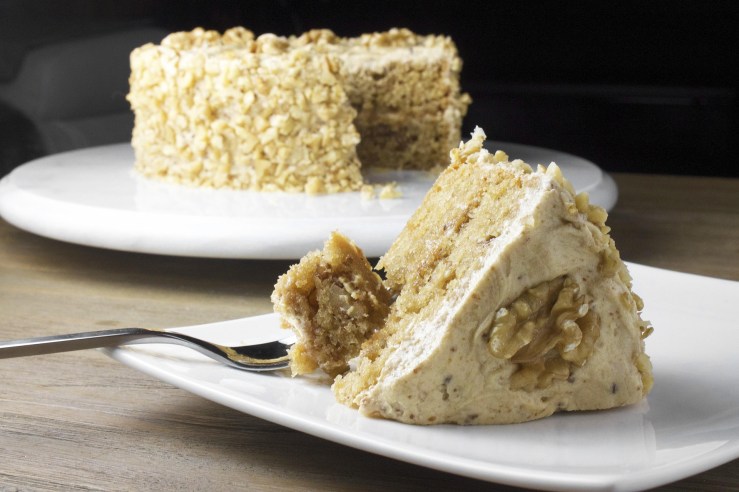
I don’t remember our birthdays before I was about five, but I do remember one when I was just about that age. We were at Grandma’s house (his mother), and she had baked a 2-layer birthday cake for us. I was sitting on Dad’s lap as our family sang Happy Birthday to us. My candles were on one side of the cake. Dad’s were on the other. I had several little candles. Dad had just one, bigger than all of mine. 

Most of our birthdays were spent at home. Mom always made us delicious 2-layer cakes, too. Our favorite was German chocolate with coconut icing, both of which she made from scratch. 

Like the birthday I remember at Grandma’s, we always shared a cake, but we each had our own candles. When someone would make a comment about me being Dad’s birthday present, he’d always say, “Some present!” Then he would laugh, his eyes twinkling. I knew he was teasing, of course. 

Later, when I grew up and married, we usually didn’t spend the day together because we lived 50 miles apart. Instead, I always made it a point to call and wish him a happy birthday—until one birthday that I couldn’t. 

It happened in the days before cell phones. We weren’t at home, and I didn’t have easy access to a telephone. I felt bad about it of course. 

Mom told me later how disappointed he was that I hadn’t called. I made sure it never happened again. Some dates stay written on the heart. 

The Green Pickup

Riding on the Fender

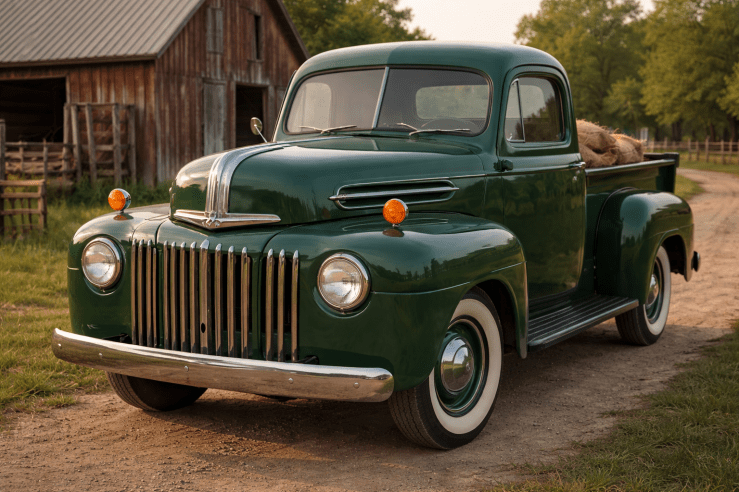
Life in the Midwest in the 1950s was slow and easy, or so it seems by today’s comparison. We lived on a farm, and I remember that Dad had a dark green pickup truck with fender mounted blinkers that had orange glass in them. I  was to learn later the truck was a 1949 Ford. 

One afternoon, Mom, Dad, and I, piled into the truck to make a trip to Nina‘s country store not far from our house.  We were on a mission to buy popsicles.  Dad was a farmer so it wasn’t unusual for us to see him at different times throughout the day.  My brother, Monty, wasn’t with us so I assume that he was in school.

It started out as any other trip to Nina‘s store, Nina being the proprietor. Mom and Dad conducted their business and we all got popsicles. The question was how to eat them without getting the inside of Dad‘s truck all sticky.

With all the wisdom of any five-year-old, I suggested that we ride on the fender. Obviously it would’ve been more normal had we decided to ride in the back of the truck, but for some reason I wanted to ride on the fender. So that’s what we did. I straddled the blinker and Mom told me to hold on tight which I did. She sat behind me and put her arms around me and we held tight to the blinker together.  

Dad pulled away from the store driving very slowly. I didn’t know how fast he was going then but, in hindsight, I  estimate that it was probably less than five mph. I remember watching the road in front of us and thinking that I could’ve probably run faster than the truck was going. (I couldn’t.)

I don’t know why we did that. I think it’s because I wanted to do it and my parents indulged me. It was a time out of time. People don’t do things like that anymore that I’m aware of. But they used to let us ride in the back of the pickup truck, too, always with admonition to sit down. I seem to remember Mom riding in the back with us to make sure we did.

Brownie and Me


When I was about three years old, we lived on a farm. My playmates were the barn cats, my dog, Brownie, and my brother who was in school all day. 

Brownie was a mixed-breed dog, but to my young eyes he looked very much like a border collie. He was mostly black, with white boots on his feet and soft brown markings just above them, where the white fur met the black. His face was dark, except for the brown eyebrows that always delighted me—I had never seen a dog with eyebrows before. He was beautiful to me, and he was mine.

One day, Brownie and I wandered into the chicken yard adjacent to the house. The chickens were long gone, and my Dad had placed an empty rabbit hutch there. 

Curious, I walked over and opened the door, which was only latched with a scrap of wood and a nail. To lock or unlock the door, all you had to do was turn the piece of wood. 

I unlatched it and climbed in. As the door shut, the latch fell into place and I couldn’t get out. So, what does a little kid do when she’s scared? I cried. And cried. And then cried some more. 

The more I cried, the more agitated Brownie got. Soon, he took off for the house and started barking his loudest at the back door. Mom tried to make him hush, but he wouldn’t stop. She finally came outdoors where she heard  me crying. 

Still barking, Brownie took off for the chicken yard, stopping every few steps to make sure Mom was following. It only took her moments to reach me, but it was such a relief to finally be in her arms. 

Brownie was somewhat of a legend in our family. Mom knew he could be trusted to look after me. That wasn’t our last adventure, but it was the last rabbit cage I tried to crawl into!

A Quiet Grief

December 22, 2025

When my husband died, I died too. Not in the same sense, of course, but the life and love I had known for 52 years were gone in an instant. I was lost. I didn’t know what to do or how to go on without him. And yet I did, whether I wanted to or not.

Those first days were surreal. I didn’t know what to do with myself, and I couldn’t get away from the pain. Even brief distractions only reminded me of what I had lost.

Days turned into weeks, and weeks turned into months. Then the firsts began. The first Thanksgiving without him. The first Christmas without him. His first birthday in Heaven. 

I had sweet memories of our lives together and returned to them often, picturing where we were and what we were doing. Sometimes, they were how I soothed myself to sleep.

I thought the second year might ease a little. It did in some respects, but there were the seconds — second-year celebrations marked by the empty chair at the table and his recliner no one would sit in.

During this time I stopped doing so many things that had once been enjoyable for me. Carl and I had a multipurpose basement that was part storage and part recreation. His computer sat in one side of the basement, and my paper crafting area sat in the opposite side. He used to go downstairs and peruse social media while I made greeting cards and other paper crafts. When he died, I lost all interest in paper crafting. 

It was during the summer of the third year that I had a sudden revelation that shocked me. I realized that I had been suffering a quiet depression — quiet because it didn’t look dramatic or urgent. It consisted mostly of apathy. I lost interest in nearly everything in my life except my children. I gave up my driver’s license for several reasons and stopped going out except for doctor visits and food. 

Looking back, I can see that the holidays during this third year were still hard — but they landed somewhat softer. His birthday still lies ahead. I haven’t forgotten him. I never will.

Once I realized that, things began to change. I had been in coasting mode with my health, so I took charge of it and made improvements that needed to happen.

It was also during this time that I rediscovered my love for writing. I wanted to start a blog, and what you see here is the result of that.

As they always do, the holidays came around again. I opted not to spend time with my family for Thanksgiving this year. I treated myself gently and spent the day in bed, not from depression, but as a kindness to myself to rest and recharge. I woke up that afternoon feeling good, really good, for the first time in years. I don’t know where it came from, only that it felt like part of my healing — and I was grateful for it.

The Patched Dishcloth

December 20, 2025

One day, long after I was married and had children of my own, I was at Mom’s house, cooking and doing dishes as we prepared for a family dinner. I reached into the drawer where she kept her dishcloths and towels. A scrap of multicolored terrycloth with white stitching caught my eye, and I reached in to pull it out of the drawer. 

I immediately started laughing. Turning without comment, I held it up in front of her. She recognized why I was laughing, then she began to laugh along with me.

What I held in my hands was a patched dishcloth. It was a solid piece of fabric, clearly made from two different cloths — one pink, one lavender — stitched together with white thread to form something new. It represented her life in so many ways — and how she cared for her family.

Both of my parents’ lives were shaped by the Great Depression and the years of World War II where they learned the value of taking care of what they owned and mending what was broken. In this case, a torn dishcloth, insignificant by itself, was made into something useful once again. 

I thought of the other things she mended without ceremony. Socks turned inside out and mended as she watched television with the family, hems let down or taken up as we grew, small tears stitched before they became big ones. She crocheted doilies to decorate our home, kept the house tidy, and somehow made ordinary days feel cared for. None of it was showy. It was simply how she cared for us. 

Everything that she did in life was to see that we were warm and fed and had everything that we needed and almost everything that we wanted. As a child, I may not have appreciated that fully. As an adult and the mother of four, I understood precisely where her heart was and what it takes to make a home.

After Mom passed away, I took that patched dishcloth and put it away as a cherished memento — not just of her life, but of the quiet, ordinary care she gave us every day.