The Peanut Man

On the days Mom had to work at the hospital, I usually spent the day with Dad. Some of my fondest memories revolve around the times he took me with him to the Sale Barn. 

I don’t know if it had a name, but we always called it the Sale Barn, where farmers came to buy livestock, or brought some of their own to sell. 

There was an arena the animals were brought into for the sale, and there were bleachers where we sat high above the livestock arena. I can still hear the auctioneer’s voice as he worked through the different animals. I never had any idea what he was actually saying, but Dad seemed to know. 

And the smell—I’m sure you can imagine, but I didn’t find it particularly offensive. It just smelled like our barn, a place I loved to play.

But the real draw for me was The Peanut Man. I can’t tell you his name because I’m not sure I ever knew it. I think I may have heard it once or twice in adulthood, but he was, and always will be, The Peanut Man to me.

 He was always there with his peanut cart, dispensing bags of hot peanuts. I always wondered how he kept the peanuts hot. I never asked him, but I’m sure he would have showed me if I had. To this day I have no idea how he kept the peanuts hot. I just know that they always were. 

He was such a kind man, and he always had a smile for me. I really loved him. He was unable to speak, but he didn’t really need to. I gave him the nickel or dime my Dad gave me, and he’d turn and scoop up a brown paper bag full of hot peanuts, give me a huge smile, and hand the bag of peanuts to me. Then I would go back to where Dad was still sitting in the bleachers, and we shared that bag of peanuts. They were the best peanuts I’ve ever eaten.

I don’t know how old he was, just that he was an adult when I was a child. Everyone knew The Peanut Man in my hometown, and many remember him long after he was gone. I will never forget him. 

Ducks

My Father’s Story

I loved listening to my father tell stories, especially if they were funny. He’d laugh so hard while he was telling them that it took him much longer to tell than it would have otherwise. His laughter was contagious, and we always ended up laughing with him before we heard all of the story. A fair part of the humor in his stories was in watching the way he told them. This was one of those stories. 


One day, two men stopped by my grandfather’s farm, asking for permission to go duck hunting on his property. 

My grandfather, a salty Midwestern farmer with an enormous sense of humor who had lived long enough to see many strange sights in his life, sized them up.

It was obvious to him by the way they looked that they were city slickers — new hunting clothes, guns that didn’t look like they had ever been fired, and boots without a speck of dust on them. They went on to tell him they were in the area from Chicago for duck hunting season. Yep, city slickers, all right.

Tongue in cheek, Grandpa gave them permission, but asked them to stop by and see him before they left so he could see how many they bagged. They were off, and Grandpa could hear occasional gunshots over the course of the day. 

Late that afternoon, they were back. Each held a burlap bag partially filled with their quarry. Grandpa inspected both bags, and handed them back to the city slickers. 

“That’s a really nice bunch of ducks you’ve got there,” he told them. 

They thanked him again for allowing them to hunt on his property.

“You’re welcome. Come back any time,” he told them as they waved goodbye. 

He sure was glad to get rid of those crows. 

Dad passed away almost 35 years ago, and the last time I heard him tell that story, he was sitting at my kitchen table, laughing so hard it’s a miracle he didn’t fall off his chair. 

I can still hear the laughter, and see his face and him doubled over with it. That is how I will always remember him. 

Born on My Father’s Birthday

A Quiet Reflection

I was born on my father’s birthday, January 27th. The day was always special. It belonged to us alone. 

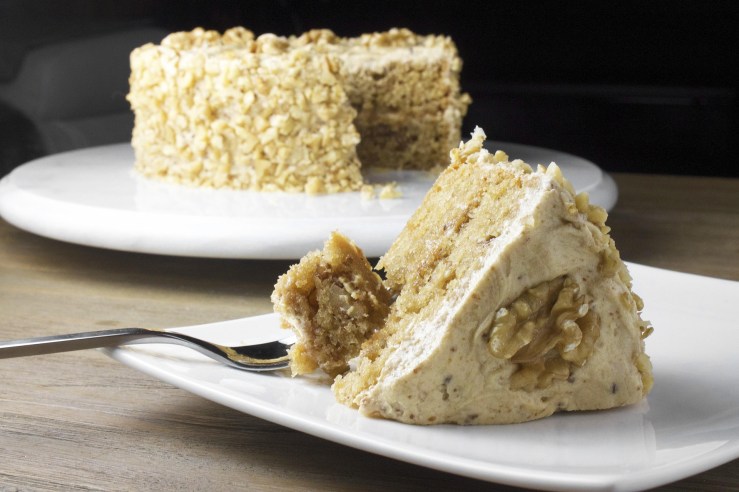
I don’t remember our birthdays before I was about five, but I do remember one when I was just about that age. We were at Grandma’s house (his mother), and she had baked a 2-layer birthday cake for us. I was sitting on Dad’s lap as our family sang Happy Birthday to us. My candles were on one side of the cake. Dad’s were on the other. I had several little candles. Dad had just one, bigger than all of mine. 

Most of our birthdays were spent at home. Mom always made us delicious 2-layer cakes, too. Our favorite was German chocolate with coconut icing, both of which she made from scratch. 

Like the birthday I remember at Grandma’s, we always shared a cake, but we each had our own candles. When someone would make a comment about me being Dad’s birthday present, he’d always say, “Some present!” Then he would laugh, his eyes twinkling. I knew he was teasing, of course. 

Later, when I grew up and married, we usually didn’t spend the day together because we lived 50 miles apart. Instead, I always made it a point to call and wish him a happy birthday—until one birthday that I couldn’t. 

It happened in the days before cell phones. We weren’t at home, and I didn’t have easy access to a telephone. I felt bad about it of course. 

Mom told me later how disappointed he was that I hadn’t called. I made sure it never happened again. Some dates stay written on the heart. 

The Green Pickup

Riding on the Fender

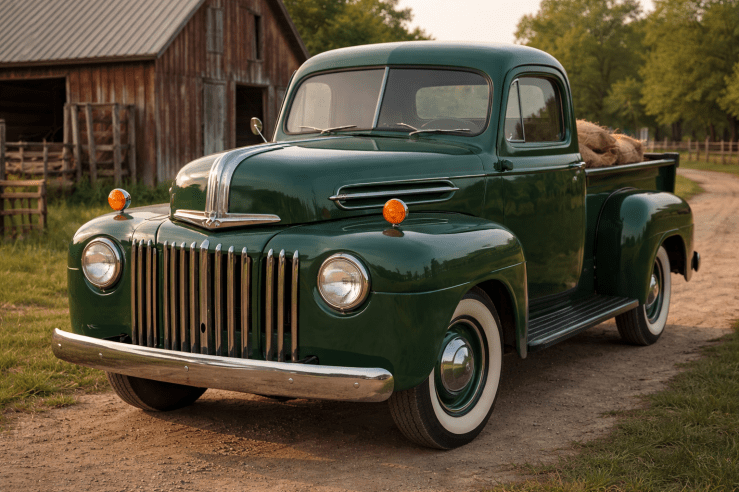
Life in the Midwest in the 1950s was slow and easy, or so it seems by today’s comparison. We lived on a farm, and I remember that Dad had a dark green pickup truck with fender mounted blinkers that had orange glass in them. I  was to learn later the truck was a 1949 Ford. 

One afternoon, Mom, Dad, and I, piled into the truck to make a trip to Nina‘s country store not far from our house.  We were on a mission to buy popsicles.  Dad was a farmer so it wasn’t unusual for us to see him at different times throughout the day.  My brother, Monty, wasn’t with us so I assume that he was in school.

It started out as any other trip to Nina‘s store, Nina being the proprietor. Mom and Dad conducted their business and we all got popsicles. The question was how to eat them without getting the inside of Dad‘s truck all sticky.

With all the wisdom of any five-year-old, I suggested that we ride on the fender. Obviously it would’ve been more normal had we decided to ride in the back of the truck, but for some reason I wanted to ride on the fender. So that’s what we did. I straddled the blinker and Mom told me to hold on tight which I did. She sat behind me and put her arms around me and we held tight to the blinker together.  

Dad pulled away from the store driving very slowly. I didn’t know how fast he was going then but, in hindsight, I  estimate that it was probably less than five mph. I remember watching the road in front of us and thinking that I could’ve probably run faster than the truck was going. (I couldn’t.)

I don’t know why we did that. I think it’s because I wanted to do it and my parents indulged me. It was a time out of time. People don’t do things like that anymore that I’m aware of. But they used to let us ride in the back of the pickup truck, too, always with admonition to sit down. I seem to remember Mom riding in the back with us to make sure we did.

Tongue on the Pump Handle

Never Ever

“Whatever you do, never ever stick your tongue on a pump handle,” cautioned our hired hand.

It just so happened we had a pump handle between the house and the barn. 

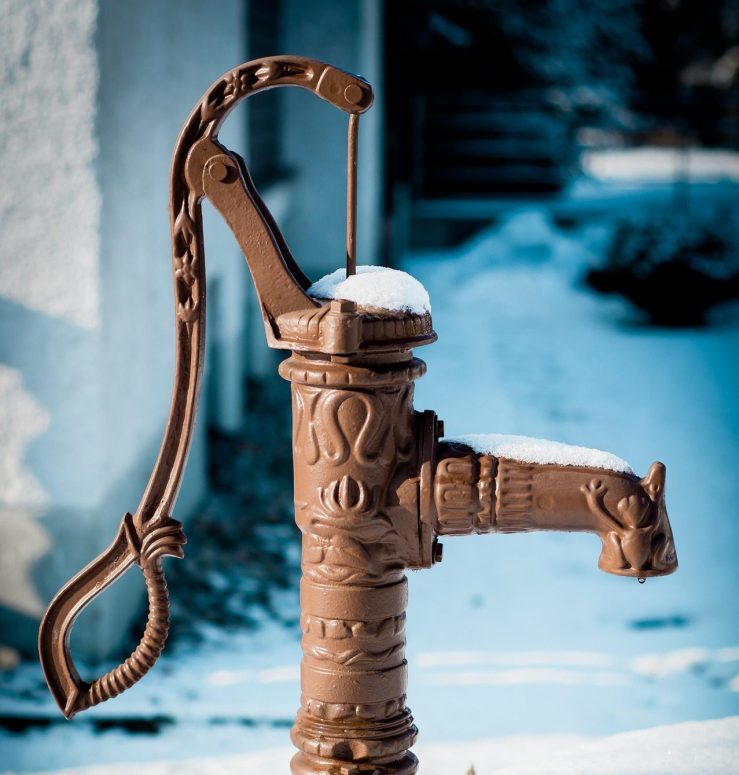
Old hand water pump in winter snow

It was winter.

Ever curious, I thought about it. The next time I went outside, I walked over to the pump. At that tender age, I didn’t see what all the fuss was about. So I tested it out. 

And stuck fast.

It instantly became clear why I should never ever stick my tongue on a pump handle. It was so cold, it felt like my tongue was burning. I was outside alone, so there was no one to help me. Wanting to get away from it, I jerked my head back—and took a layer of skin off my tongue. 

That hurt almost as bad as it did while my tongue was still stuck on the pump handle, and it continued to hurt for several days afterward. 

Mom had words for the hired hand.

When My Brother Ran For Help

Lying in the middle of the road with the sun in my face and gravel poking me everywhere was secondary to the pain in my foot, twisted and caught between the spokes of my brother’s bike.

I looked to make sure no cars were coming, though there wasn’t much I could have done about it anyway. I couldn’t get up. The bike had me trapped. I was scared I would be run over.

I listened for the sound of cars but heard nothing and was only slightly reassured that I would probably see a plume of dust before I actually heard one. The blind hill about 200 feet in front of me was worrisome, because cars usually came up over it pretty fast.

Just before that, my brother Monty, had been giving me a ride on his new bike. He told me to hold my feet out and away from the spokes so they wouldn’t get caught. I listened, and I did try—but accidents happen anyway.

Watching him run away from me toward the house scared me, too. I knew he was going to get Mom, but I felt so alone. It seemed like I had been lying there a long time, but it probably wasn’t more than five minutes, since we weren’t far from the house.

Finally, I saw Mom and Monty hurrying down the driveway toward me. I was so glad to see them. Mom gently removed my foot from between the spokes and carried me back to the house, where she examined my foot and determined that no bones were broken.

Looking back, it’s clear to me that even then, Monty had my best interests at heart.

Dickie and the Horse

Dickie and his family lived on the farm next to ours. They had a horse that I often saw standing at the pasture fence beside their house. It was big. Bigger than the horse Dad used to bring cattle in from the field—and that horse was already off-limits to me.

This one wasn’t.

I don’t remember how I got up there. Someone may have lifted me onto his back, or maybe Dickie and I climbed up on the fence and stepped over from there. What I do remember is being suddenly very high up, sitting bareback on a wide brown horse, my legs stretched farther than they were used to going.

The horse moved in a slow, steady rhythm. It felt a little like rocking in a rocking chair. My feet might have dangled, but at five years old or so, the width of his back probably kept them from going very far.

Dickie was casual about the whole thing. He wasn’t much older than I was—maybe seven—and that made it feel even more special, like this was something we were simply allowed to do.

The adults knew. Dickie had permission to take the horse out of the pasture and ride him down the road to take me home. It wasn’t a secret.

Still, I remember my mother being surprised when she saw me coming down the road, sitting so high up on that horse’s back. I don’t think she knew ahead of time.

I loved it. I was proud. I felt like I was on top of the world.

When we reached my house, Dickie stopped the horse in the front yard. Mom came out and lifted me down. I was sorry to get off. I would have happily stayed there longer.

The Pink Wall

I remember standing in my crib, holding on to the side rail, quietly looking at the wall across from my crib, comparing it to the white woodwork in the doorway to my room. I was fascinated by the color. 


I thought about that wall often, in brief flashes. For years, I didn’t know where we had lived then. I only knew that I was very little. One day when I was about 30 years old, I happened to think of it while my mother was visiting. I asked her where we had lived where the wall in my room was a deep pink with white woodwork.

A little shocked, she replied, “You couldn’t possibly remember that. You were only 10 months old.” 

She paused, then added, “It wasn’t supposed to be that dark.”

Except, I do remember. Many decades later, I can still see that wall in my mind’s eye. And I still have the feeling of being tiny. Why it made such an impression on me I can’t say. But pink always has been—and still is—my favorite color.

The Day I Went to School With My Brother

I wasn’t school age yet. I must have been four or five — sometime around 1956 or 1957. After watching my brother get on the big yellow school bus every morning, my mother sent me along to school with him one day.

It must have been late spring because I don’t remember needing a coat, and I’m fairly sure I wore a dress—because girls wore dresses to school then. It was one of those mild, sunlit days. That’s why I’ve always thought of it that way. 

The teacher gave me a little chair to use beside my brother’s desk. I was the only “extra” child — for which I am sure the teacher must have been grateful, but I remember feeling like one of the big kids as I colored beside him.

Recess was quite an adventure for me. There were so many kids to play with where I normally spent most of my days playing alone or with my dog, Brownie, while my brother was in school.

When recess was over, the teacher rang the bell for everyone to come back inside. It was a handheld bell, not the electric kind schools have today.


I have often wondered what led up to going to school with my brother, and why it was allowed, but there is no one left to ask how it came about. It may have been one of those end-of-the-year “bring your sibling to school” days—but that’s only my best guess.

Stepping Into 2026, Gently

2025 was a year of awakening and transformation for me. As the world around us has changed outwardly, so have I changed inwardly in myriad ways. 

Life after great loss brought me to a threshold, where I had to choose between staying stuck and stepping forward. I chose to step forward. 

I learned a great deal in 2025—particularly about what I want in my life, and where I am going next. What surprised me most was not the clarity itself, but the quiet confidence that came with it. For the first time in a long while, I feel grounded enough to move forward without rushing, without bracing for impact, and without needing to prove anything to anyone.

I am stepping into 2026 more gently than I have stepped into years past. Not cautiously, but intentionally. I am no longer interested in rushing toward what comes next or measuring my life against some imagined timeline. I want room to breathe, to notice, and to enjoy the life that is unfolding in front of me. If there is a theme for this year, it is presence—showing up fully, without armor, and trusting that where I am is enough to begin.

This space will reflect that same intention. It will be a place for honest words, remembered moments, and stories told without urgency. A place where grief and joy are both allowed to sit at the table, and where nothing needs to be fixed before it can be shared. If you’ve found your way here, you are welcome to rest awhile. There is no agenda, no expectation—just room to be human, together.

As we enter 2026, I wish you peace, happiness, and everything you need to sustain you. 

Brenda