The Night the World Turned Color

One afternoon when we came home from school, Mom told us that Nellie Briggs, our landlady who lived next door, had invited us over to watch Bonanza the following Saturday night. 

She had just purchased a new color television. 

Bonanza was one of our favorite TV shows, and we knew that it was now broadcast in color. It was hard to imagine since we were used to seeing it and all other television shows in multiple shades of gray.

I was so excited! I could hardly wait for Saturday night to come around. 

When the time came, we walked across the two connected yards between our homes. We stepped up onto her front porch and knocked. Nellie welcomed us and ushered us into her living room. 

And there it was. The television was larger than ours. The screen was set behind a thick glass front with rounded corners.

Mom and Dad exchanged pleasantries with her, while Monty and I sat quietly in our chairs, anxiously waiting for the show to begin. 

Finally, it came on—and I was instantly mesmerized. 

It was almost like walking into a magical world, color replacing the tones of gray that I was used to. I couldn’t take my eyes off of it.

After the show ended, we sat in silence for a few moments, and then the adults started discussing the program.

I was so enchanted by the colors that I barely remembered what the show was about. 

Soon, it was time to go home again. My parents said their goodbyes and thanked Nellie for inviting us over. 

We walked home, but I barely remember anything that came later. All I could think about was the color. 

It would be another fifteen years before I would have a color television of my own, but I never forgot that night at Nellie’s and how special it was to me. 

By today’s standards, the color probably wouldn’t seem remarkable. But to a little girl who had only known black-and-white television, it felt magical.

Waiting For the Bus in a Snow Cave

High winds, bitter cold, and swirling snow greeted us that morning as we stepped out the back door and began the walk to the bus stop at the end of our long driveway.

It was clear the walk was going to be rough. The high winds made it hard to keep our footing. 

We could tell there was a lot of snow in the driveway from the house. But our house and Nellie’s were side by side, so it wasn’t until we rounded her house that we got the full effect of it. 

The driveway was bordered on either side by wire farm fencing. It was full of snow to the tops of the fence posts, captured there by the fences themselves. 

The snow depth was almost as high as I was tall at eight years old.

In sharp contrast, the fields on either side of  the lane were windswept. 

To get to the bus stop, we had to climb up on top of the snow which, thankfully, had an icy crust strong enough to support us without breaking through.  

We could hear the wind as it skittered snow in waves across the frozen fields and the empty ribbon of highway. 

We were FREEZING by the time we got to the bus stop, the wind in our faces all the way, tiny stinging projectiles of snow assaulting every bit of our exposed skin. 

That’s when we noticed the storm had formed a snow cave in the ditch by the highway. 

The cave was big enough for us to fit inside if we crouched down. 

We ducked inside it and realized that it blocked most of the wind. It didn’t make it any warmer, but it was a relief to get out of the wind. 

Monty was a foot taller than me. He was able to see over the  tops of the drifts, so he positioned himself by the mouth of the cave so he could pop his head out occasionally and see if the bus was coming. 

Missing the bus meant missing a day of school. And neither of us wanted to try to explain that to Mom. 

After waiting about 15 minutes, the bus finally came. 

I have sometimes wondered what the bus driver thought when he saw two children suddenly pop up out of the ditch as he approached. He wouldn’t have been able to see the snow cave because the opening was facing away from the road. 

We scrambled onto the bus and were relieved to finally be inside where it was warm and out of the weather.  

On returning from school that afternoon, the wind had calmed down some, but we still had that long walk home. 

This time, we thought it might be easier walking through the field, so we jumped over the fence and walked home through the field. 

Since there was no gate on the side of the field where it bordered our house, we had to climb the wire fence when we got home. That wasn’t easy to do with frozen hands and bulky snow boots. 

The drive remained blocked for several days, so we had to repeat that walk to and from the bus daily. 

It was hard for Dad, too. Since the driveway was blocked, he had to park the car by the highway and walk home. It might have been harder for him, though, because he had to walk to the car and home again in the dark.

After Mr. Parkinson, the farmer who farmed the ground for Nellie, dug his own long drive out, he finally was able to clear our driveway. 

Many years have passed since then, and I have lived through a lot of harsh Illinois winters. But I have never seen another driveway fill completely to the tops of the fence posts or form a crust so hard we could walk on it without breaking through.

And I have certainly never waited for a school bus in a snow cave again.

The Pony and the Pig Wallow

There are some lessons you only learn once—preferably not in a pig wallow. 

I was seven when I learned that if a pony puts his head down, the rider keeps going. It was my first lesson in physics. 

One minute I was riding bareback, with nothing to hang onto but the pony’s mane. The next, I was in the pig wallow.

I did not see it coming. One moment I was upright and feeling quite capable. The next, I was flat on my back in something warm, muddy, and unmistakably pig-related.

Pig-yuck was dripping from the top of my head to my toes.

I wasn’t hurt, but I was—stunned. I had to take my glasses off so I could see, because they were covered in that same pig-yuck. 

I wasn’t far from the house, so I climbed over the fence and walked up to the back door. 

I yelled for Mom. I knew better than to walk into the house like that.

Mom came to the door. The look on her face was one of pure horror. She didn’t say much besides “What did you do?”—sort of loudly.

I tried to explain, but by then she had turned the garden hose on me…

She hosed me down starting at the top of my head, then stripped my clothes off, and hosed me down again. 

Then she wrapped a bath towel around me and carried me to the bathtub so I wouldn’t get the floor all dirty. 

By this age, I was old enough to take my own bath, but not that day. She gave me one. Then she drained the bathtub and gave me another. 

That was the last time I rode the neighbor’s pony without permission. Physics and pig-yuck are persuasive teachers. 

The Train Tracks In Our Front Yard

Just beyond the boundary of our front yard, a railroad track ran east toward Viola and west toward Aledo. We were in between the two, but closer to Aledo.

Dad and Monty always kept our yard neatly mowed. But the strip along the tracks — the part that belonged to the railroad — was left alone. There weren’t many weeds, just tall grass.

Monty and I liked to play in it. We would mash the grass down with our feet, and those flattened spots became forts or little houses.

We spent many summer afternoons there, in the sunshine and fresh air, pretending.

Sometimes a train would come by. They didn’t go very fast, and they weren’t very long. Most were only eight or ten cars — sometimes less, sometimes more — and always with a caboose.

We knew to stay back in the yard and away from the tracks when the trains passed.

Later, I learned that it was a spur line, and the trains were delivering freight to local businesses.

Sometimes the engineer had his window open, with his arm resting on the sill. We waved, and they often waved back.

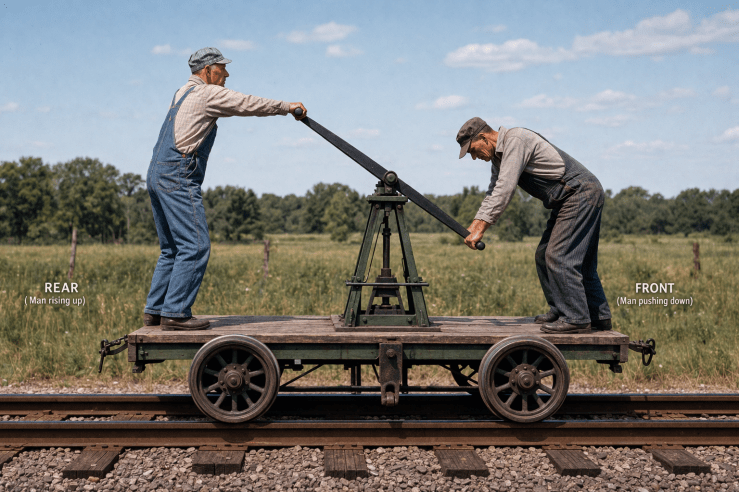
Sometimes, a handcar would come along, with two men pumping the handles to make it go.

We always thought those were funny to watch.

Echoes of The Past

I have written much about being a little girl and growing up on the farm in the early part of my life. There are so many memories that are still very vivid for me.

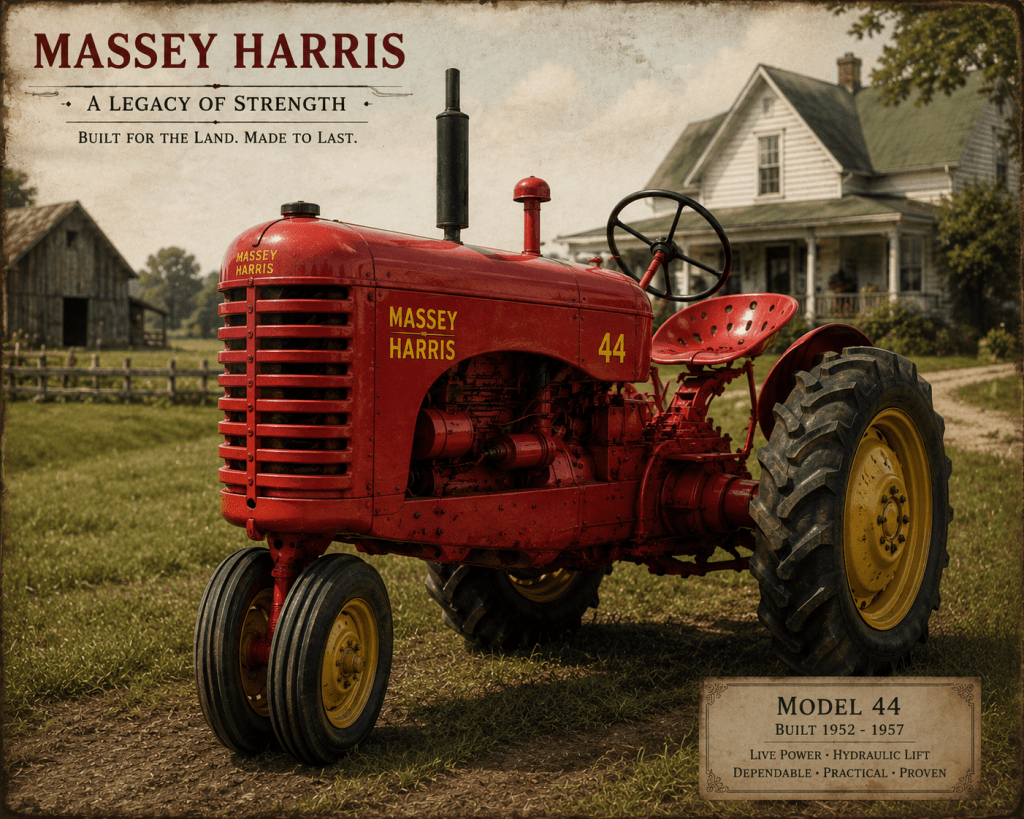
One of the things that stands out so clearly is the sound of Dad’s tractor. He owned a Massey-Harris tractor, which was a common sight in those days. They were solid, simple machines that looked very different from the modern tractors sold today.


The engine of those tractors made a steady, rhythmic sound that couldn’t be mistaken for anything else.

I remember playing in the yard and listening to it. Knowing that Mom was in the kitchen, and being able to hear Dad working in the fields made me feel safe.

I liked hearing it, but after moving from the farm I never heard it again. As the years passed, I assumed I never would.

Until… One day, about thirty-five years later. I was standing in my kitchen with the windows open. I was home alone, and it was spring planting time.

Suddenly, I heard the distinctive put-put-put of that engine once again, and I was suddenly six years old again listening for my Dad working in the fields.

But this time it wasn’t Dad’s tractor. It was one that a neighbor had acquired.

For several years afterward, I welcomed the sound of that tractor every spring. For a few minutes I was transported back to a time of innocence long ago.

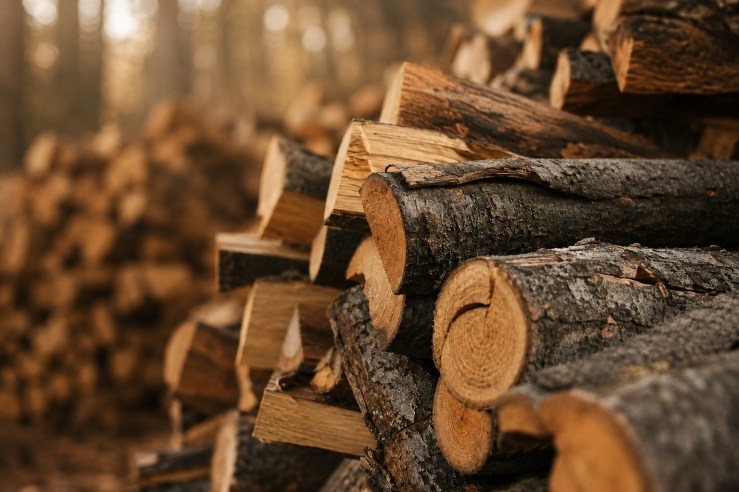
Ironically, Carl purchased another Massey-Harris tractor sometime in the 1980s to use for cutting and hauling firewood, but the engine was bad. He replaced it with the engine he took out of his 1969 Pontiac Firebird when he sent it to the scrap yard, but that is a story for another day.

Autumn Leaves and Training Wheels

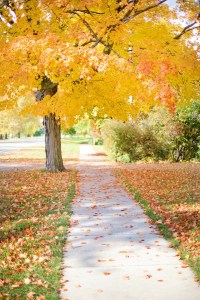
Leaves crunched under my feet. The tall oak trees surrounding our school were alive with color as the blue sky and late afternoon sun filtered through them. The crisp autumn air held the faint scent of burning leaves somewhere in the neighborhood.

I was six years old, and the sheer beauty of the day felt like it was wrapped around me.

We had moved into town a few months earlier. Our house and the school were only a block apart, both along the highway that ran through town.

My friend, Susie, and I had agreed to meet back at school that day. She had received a new bike with training wheels for her birthday, and she told me she would teach me to ride it. But first, we had to go home and ask our mothers if it was okay.

Mom gave me permission, but reminded me to stop, look, and listen before crossing the street—and not to cross the highway under any circumstances.

Susie met me at the school a short time later, and that’s how I learned to ride a bike.

Susie rode it first, showing me what to do.

Soon it was my turn.

At first, I just sat on the bike. Then I slowly started pedaling. It wasn’t quite as easy as it had looked when Susie rode it. The handlebars wobbled, and I felt a flicker of frustration.

But once the wheels began to move and I found the rhythm of it, the wobble settled. By the time we reached the end of the block, I was more proud than frustrated.

Susie kept pace alongside me to the other end of the block. I turned the bike around, and she rode it back while I kept pace with her.

We continued in this way for a while, until the sun got lower in the sky and we knew it was time to go home.

By then, I was pretty sure I wanted a little bike with training wheels of my own.

I crossed the street toward home, the sound of leaves still crunching under my shoes, carrying the whole golden afternoon with me.

Nap Rugs and Sugar Plum Fairies

Whenever I hear “Dance of the Sugar Plum Fairies,” I am six years old again, lying on a nap rug in my first grade classroom—warm and safe.

Kindergarten wasn’t required back then, so first grade was my first real taste of school—and I loved it.

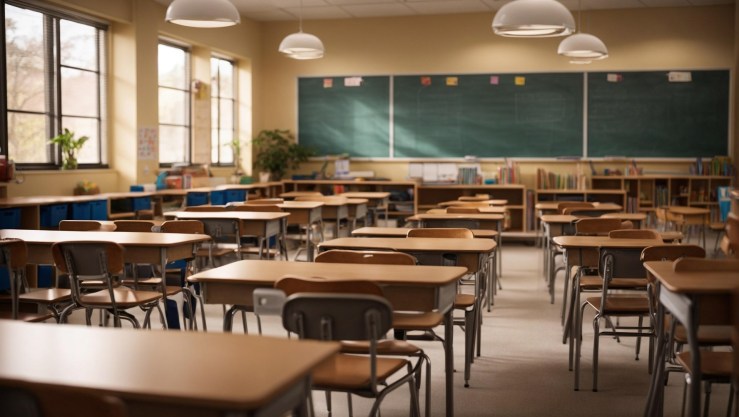
After lunch, my teacher — Mrs. Quanstrom — told us to get out our nap rugs and lie down. She turned off the lights, but the room never got completely dark. The tall classroom windows still let in the afternoon light, filtered through the oak trees that lined that side of the school.

After turning off the lights, she put a record on the classroom player. I don’t remember all of the songs she played, but “Dance of the Sugar Plum Fairies” was my favorite.

The room was very quiet except for the music. We could take a nap if we wanted to, but I was always too interested in listening.

The rug beneath me was soft. Mom knew why the teacher asked us to bring one, so she chose a rug she knew would be comfortable to lie on.

I don’t remember ever falling asleep. I was too busy listening—to the music, to the quiet, to the feeling of being exactly where I belonged.

I didn’t always keep my eyes closed, but I did most of the time. And when “Dance of the Sugar Plum Fairies” played, I could see them in my imagination.

The fairies were small and light, and they danced and twirled in the air above me.

Even now, when I hear that music, I am six years old again, lying on that soft rug in a classroom washed in afternoon light.

I am still lying on that rug.

And I can still see the fairies.

No, I never did fall asleep during nap time.

I was already dreaming.

Bluebells in Spring

Bluebells — one of my favorite signs of spring — usually arrived sometime in April, along with gentle breezes and a general thawing of the land.

I lived just three blocks from school, so I walked there and back each day. There was a patch of bluebells I passed twice daily. They belonged to Mrs. Joseph — an elderly neighbor — but she said she didn’t mind if I picked a few.

I was careful not to take too many, so we both could enjoy watching them grow. Mostly, I stopped to smell them — once or twice every day for as long as they bloomed — but sometimes I gathered a small bouquet for Mom. They smelled so good.

A friend showed me how to pluck a blossom from the stem, place the stem end in my mouth, and draw out what I can only assume was nectar. What a sweet surprise.

One year, I made May baskets from construction paper and filled them with small bouquets of bluebells. I left one for Mrs. Joseph, one for Mom’s best friend Marion who lived next door, and one for Mom — and felt very grown up doing it.

There were other flowers in the neighborhood, of course — many in our own yard, as Dad was an avid gardener — but nothing was ever quite so sweet as those first bluebells in spring.

The Icy Basement Stairs

Our farmhouse had a basement, but the only access was from the outside. The steps were concrete, but the basement itself had a dirt floor. 

One winter, the basement stairs were coated in a thick sheet of ice, too thick to be walked on. In my child’s mind, it looked like the perfect opportunity to slide down the stairs on my backside. 

So, I did. 

Once I got down there, it occurred to me that I couldn’t get back up.

The stairs were right next to the back door. I yelled for Mom. 

She couldn’t come down after me or she might have gotten hurt. So she looked around for a solution. Finding none, she stepped into the enclosed porch and brought a broom back with her. 

She extended it down to me, told me to hold on tight, and pulled me up the basement stairs. 

Being pulled up the stairs was almost as much fun as sliding down them in the first place. Having learned absolutely nothing from the first adventure, I did it again after she went inside. 

Of course, I still had no idea how to get out but, since it worked the first time, I called Mom. As before, she extended the broom to me, and hauled me back upstairs again. 

This time, rescue came with a stern look — the Mom look — and she told me not to do it again. 

I didn’t. I wasn’t about to risk getting the Mom look again. 

The Little Green Basket

I have always liked baskets — or virtually anything I can put treasures in. That all started when I was a little girl.

Mom gave me a small green wicker basket. Sometimes I went to the barn to gather eggs when Dad was out there, because our chickens free-ranged and liked to hang out in the hayloft. Finding their eggs was often something of an exploration, and I would usually come back with only a handful.

Other times — especially in spring or summer — I took great delight in bringing Mom baskets of dandelions, though they were usually half-closed by the time I made it back to the house.

I wasn’t allowed to roam the whole farm, nor would I have wanted to. But as long as I stayed in the yard or the adjacent barnyard, my exploring had no real limits. Sometimes I visited the rabbits in the pens Dad kept beside the barn.

By the time I brought my basket home, the dandelions had left their yellow dust on my fingers — and on my nose.

Dad used to laugh and say it was obvious I liked butter.