You’ve Got Mail!

When I was a little girl, my paternal grandmother used to send me things in the mail.

Sometimes, she tucked a piece of chewing gum into a letter that she wrote to my mom.

Several times, she sent me handkerchiefs that she crocheted pretty edgings on. I still have all eight of them.

It was always something flat that would fit neatly into an envelope so it would go through the mail for the standard price of a three-cent postage stamp. (I can still remember the displeasure my mother voiced when the price went up to four cents!)

It doesn’t seem like much by today’s standards to get a piece of gum in the mail. But at five years old, receiving an unexpected treat in the mailbox meant my Grandma was thinking of me.

Now, as an adult — and someone who made a career out of being a fiber artist — I can fully appreciate the time and care it took to crochet the edgings on those handkerchiefs and to knit the many pairs of slippers she made for me one Christmas long ago.

Moving from the Farm Into Town

In early summer of 1958, after school was out for Monty, we moved from our farm in Wanlock, just outside Viola, Illinois, to Galva — about 30 miles east — where my world expanded in ways I couldn’t yet begin to imagine. Life would never be quite the same. 

There were so many “firsts.” For the first time in my six years of life: 

– The wide open spaces of the farm were replaced by  houses that were built closer together with a state highway outside our front door that I was forbidden to cross. 

– We had indoor plumbing! I was fascinated by the bathtub, which Mom let me play in sometimes. That meant no more baths at the kitchen sink, and no more trips to the outhouse when it was raining or in the cold of winter. 

– I was finally old enough to start school that next fall.  I had been begging for this for a couple of years, and now my fondest wish was granted. It would impact my life in ways I could not have foreseen, and set me on a journey of learning that continues to this day. 

– I lost my best friend and constant companion —  Brownie, our farm dog. City ordinances said he had to be tied. He was clearly unhappy, so he went to live on another farm with new children to play with. 

– Monty and I had a little more freedom. The town was small, but it had a candy store in the center of town. We were occasionally allowed to walk there to spend our nickels and dimes. There was also a concrete wading pool nearby which was open to the public — but couldn’t have been more than a foot deep. I had to sit or lie down to get wet all over.

– I made new friends. Susie lived a short distance away. The Mohnen twins (both boys) lived across the street. The lady who lived opposite us on the other side of the state highway liked to hold me on her lap, but I could only go see her if Mom was with me. 

I missed the farm, but there were so many new experiences that I also enjoyed so I adjusted quickly. 

The move into town was only the beginning of a lifetime of learning and growth. 

I would never visit the farm again except for two or three times as an adult when we were in the area, a nod to the nostalgia of my childhood. But sadness in losing it never truly came, because it is deeply embedded in my memory and lives on in my stories. That is why I write them — to remember, and for them to live on in the lives of my children and grandchildren and all who come after. It is also to leave behind a small bit of history —  to tell what life was like on a northwestern Illinois farm in the 1950s.

The Icy Basement Stairs

Our farmhouse had a basement, but the only access was from the outside. The steps were concrete, but the basement itself had a dirt floor. 

One winter, the basement stairs were coated in a thick sheet of ice, too thick to be walked on. In my child’s mind, it looked like the perfect opportunity to slide down the stairs on my backside. 

So, I did. 

Once I got down there, it occurred to me that I couldn’t get back up.

The stairs were right next to the back door. I yelled for Mom. 

She couldn’t come down after me or she might have gotten hurt. So she looked around for a solution. Finding none, she stepped into the enclosed porch and brought a broom back with her. 

She extended it down to me, told me to hold on tight, and pulled me up the basement stairs. 

Being pulled up the stairs was almost as much fun as sliding down them in the first place. Having learned absolutely nothing from the first adventure, I did it again after she went inside. 

Of course, I still had no idea how to get out but, since it worked the first time, I called Mom. As before, she extended the broom to me, and hauled me back upstairs again. 

This time, rescue came with a stern look — the Mom look — and she told me not to do it again. 

I didn’t. I wasn’t about to risk getting the Mom look again. 

The Penny Jar

One summer, a teenage cousin came to stay with us for a short time to help Dad at haying time and earn a little money in the process. Let’s call him Jack. 

Since our family was using all of the bedrooms on the ground floor, Mom gave Jack one of the rooms upstairs to use while he was with us. 

Monty and I usually didn’t go upstairs, but we must have followed Mom up there when she made the bed and tidied up. That’s when we discovered the penny jar on his dresser. 

It was my brother who began teasing him that we were going to take the pennies in his penny jar when he was out helping Dad — and of course I chimed in. 

Jack didn’t seem to have much of a sense of humor when it came to his money, which made it all the more tempting to tease him. 

So, Jack told Mom that we said we were going to take his precious pennies. We weren’t of course, and Mom told him so. 

I don’t think he took much comfort in that, though. He didn’t stay very long. 

Jack is still alive, though I haven’t seen him in more than fifty years.

I sometimes wonder if he’s still guarding a penny jar somewhere — and if he’s still mad at two farm kids who never actually took a single penny.

The Little Green Basket

I have always liked baskets — or virtually anything I can put treasures in. That all started when I was a little girl.

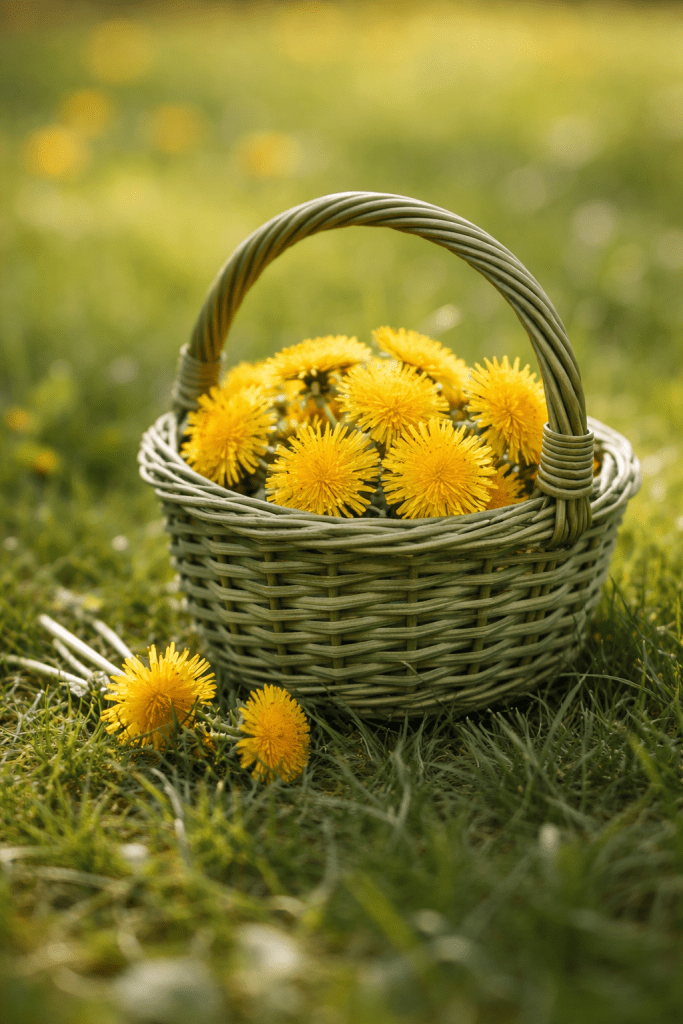
Mom gave me a small green wicker basket. Sometimes I went to the barn to gather eggs when Dad was out there, because our chickens free-ranged and liked to hang out in the hayloft. Finding their eggs was often something of an exploration, and I would usually come back with only a handful.

Other times — especially in spring or summer — I took great delight in bringing Mom baskets of dandelions, though they were usually half-closed by the time I made it back to the house.

I wasn’t allowed to roam the whole farm, nor would I have wanted to. But as long as I stayed in the yard or the adjacent barnyard, my exploring had no real limits. Sometimes I visited the rabbits in the pens Dad kept beside the barn.

By the time I brought my basket home, the dandelions had left their yellow dust on my fingers — and on my nose.

Dad used to laugh and say it was obvious I liked butter.

Barn Cat Hijinks

We had a lot of cats when we lived on the farm. Most were wild, though two or three were tame enough for me to play with. The wild ones generally stayed around the barn and didn’t come near the house except when Mom fed them.

Chaos erupted one day when one of the wild ones slipped into the house as someone opened the back door. He had never been inside before. Terrified wild-cat behavior ensued.

I remember him streaking through the house like his tail was on fire. Mom sent me into another room, but I watched from the doorway as the cat tried to escape through a closed window.

Wild-eyed, he began climbing Mom’s new sheer white curtains, shredding them as he went. She was not happy — to put it mildly.

There was no way to catch him bare-handed without inviting great bodily harm.

Careful to keep herself between me and the cat, Mom opened the door and tried shooing him onto the enclosed porch. He was having none of it.

Seeing no other solution, she grabbed a throw rug from the floor, wrapped up the cat — still clinging to the curtain — and hurled the whole furious bundle out the back door into the yard.

The curtains were ruined. It wasn’t long before we had new ones.

After his traumatic eviction, the cat was never brave enough to try the house again. In fact, I don’t remember seeing him near it after that — though Mom said he walked funny for a while.

In the Kitchen with Captain Kangaroo

Most mornings of my early childhood began in the kitchen, sitting in my little upholstered rocking chair, watching Captain Kangaroo.

The kitchen was the warmest room in the house in winter, and it was where my mother spent most of her day. While I watched television, she cooked, baked, and moved quietly around me. The air always smelled of something good. I felt safe there. Cozy. Loved.

I don’t remember the house being cold — but I suppose it must have been, especially the floors. Instead of slippers, Mom bought me a pair of ankle-high fur-lined snow boots to wear in place of slippers. She had a pair just like them in her own size. We matched. I liked that. 

Captain Kangaroo, Mr. Green Jeans, Bunny Rabbit, Grandfather Clock, and Dancing Bear felt like members of our household. They were part of my mornings, part of my growing up.

Our farmhouse had no central heating, like many rural homes in the 1950s. Two oil stoves heated the main floor — one near the bedrooms, one in the kitchen — and none upstairs, which we used mostly for storage. Winters were cold in the Midwest, and that was especially evident in our living room, caught between the two stoves. So my parents brought a television into the kitchen instead. A portable set with rabbit ears. And a child-sized upholstered rocking chair just for me.

There was a long counter along the west wall with no cabinets underneath. That became my little house. I played there for hours. Close enough that Mom could see me, far enough that neither of us would trip over the other. I didn’t know it then, but it was the perfect arrangement.

Where my mother was, I was.

And where that little rocking chair sat — that was home.

Bloomers


Dad used to buy livestock feed in colorful linen bags, which he saved and brought home to Mom. She loved to sew, and she turned them into pretty and useful things for us and for the house.

I remember once she made some bloomers for me. That’s what she called them, but they didn’t look like the old-fashioned type that girls and women wore under dresses in earlier eras. I would compare them to the little matching panties that are sold with toddler dresses today.

They were pretty and ruffly, and I loved them. I was pretty proud of them.

One morning, I followed my brother to the bus because I wanted to show the kids my pretty new bloomers. I think that was all I was wearing.

I don’t remember ever walking to the bus with him after that.

I suspect I embarrassed him and he asked Mom to keep me in the house.

Big brothers have their limits.

Leaving the Farm

We lived on the farm until I was six years old. Dad sold all the animals and equipment, but he kept his milk trucks. The milk routes were one of the main reasons we moved — now he had access to two creameries instead of just one.

We moved to a new town, where I started school. Learning to read was thrilling, and it remains one of the great joys of my life. I remember Dick and Jane, and Spot and Puff, with deep fondness.

Everything was different there — city streets instead of gravel roads. We brought Brownie, of course, but a city ordinance meant he had to be tied up. We lived on a highway at the edge of town, and our small yard was a poor substitute for the acres of farmland he once roamed.

Mom and Dad said it wasn’t fair to keep him tied. He was sad — a farm dog, after all, used to chasing rabbits and running through open pastures. So Dad found him a home on a farm belonging to a good customer on one of his milk routes. I was sad, too. I missed him terribly. But Dad said Brownie was happier there, and that gave me comfort.

Over the next two years, we moved several more times to accommodate Dad’s changing business. Near the end of my third-grade year, Dad sold the milk trucks, found a better job, and purchased Mom’s childhood home in a small rural village only a few miles from the farm.

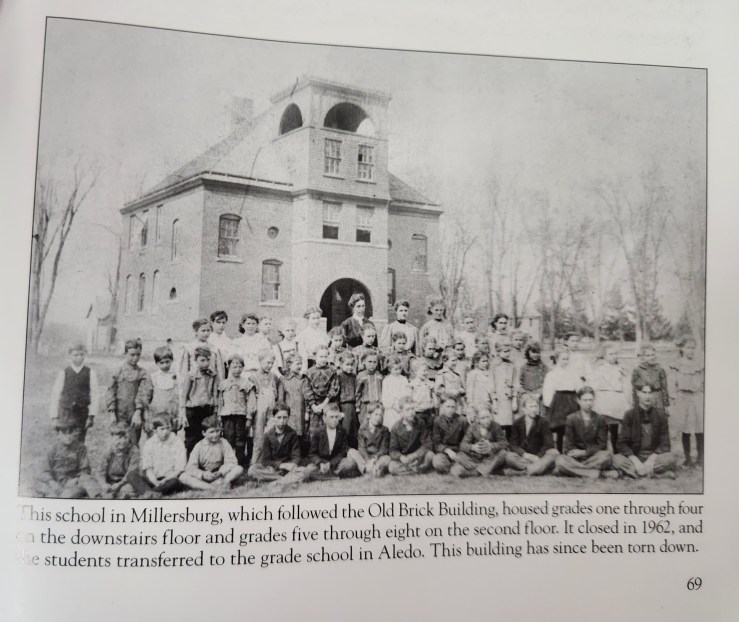
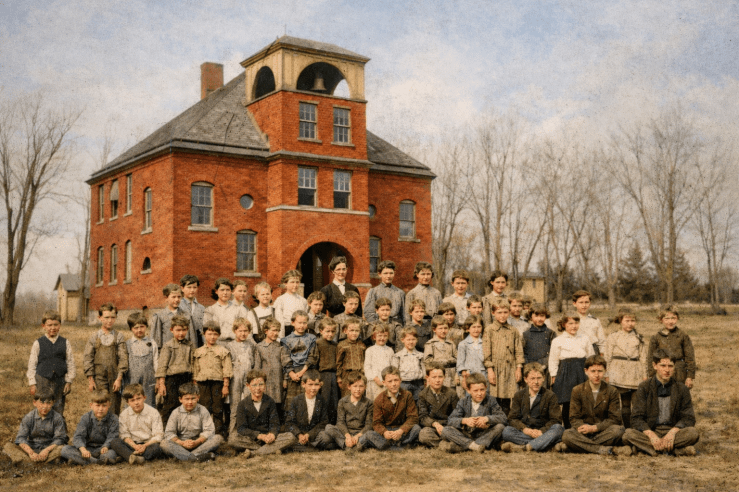
Soon after, Mom enrolled me in school — the one I came to think of fondly as The Little Red Schoolhouse. It was the same country school that Mom and her eight brothers and sisters had attended before me.

Black-and-white historic photograph of Millersburg School building with students and teachers posed in front.

Millersburg School building, which housed grades 1–8 (later
1–6) before closing in 1962. Historic photo — not my class.
Color rendering of the Millersburg School re-created from the historic photo.


The entire school, grades 1–6, fit into two classrooms. Most grades had six to eight students. Some had fewer. When I was in fifth grade, there were only four children in fourth.

It was small in a way that felt personal.

Dad Measured My Backside

Our farmhouse sat on top of a hill. The yard and driveway sloped gently down to the gravel road that passed our house and connected the community. That hill, and everything on it, shaped my early childhood. 

In the front yard were two trees. One was a tall pear tree, but I only know that because I heard my parents say so. I’m not sure what the other one was. It was broader and had a long limb that someone had hung a porch swing from — the kind that several people could sit in. I liked it and sat in it from time to time, but I couldn’t really swing — my legs were too short. 

Mom and Dad decided I needed a swing of my own, one that was just the right height for my short little legs to reach the ground. 

One sunny afternoon, they announced that today was the day I would get my new swing. I was so excited!

Dad gathered the materials — a rope, a board, a hand saw, and a drill. When he had everything together, he called us outside. I watched as he tossed the ends of the rope over the limb of the pear tree, then secured them in place. 

Next, he told me to turn around and bend over. I didn’t question it — grownups always knew what they were doing — so I did.

“I have to measure you to make sure I cut the board wide enough,” he said. He didn’t use a measuring tape. He just held the board up behind me. 

Mom told me many years later that what I didn’t see was the grin on his face and the wink he gave her when he said it. 

I loved that swing. Since the yard sloped, I felt like I was swinging a lot higher than I actually was because of it.