Echoes of The Past

I have written much about being a little girl and growing up on the farm in the early part of my life. There are so many memories that are still very vivid for me.

One of the things that stands out so clearly is the sound of Dad’s tractor. He owned a Massey-Harris tractor, which was a common sight in those days. They were solid, simple machines that looked very different from the modern tractors sold today.
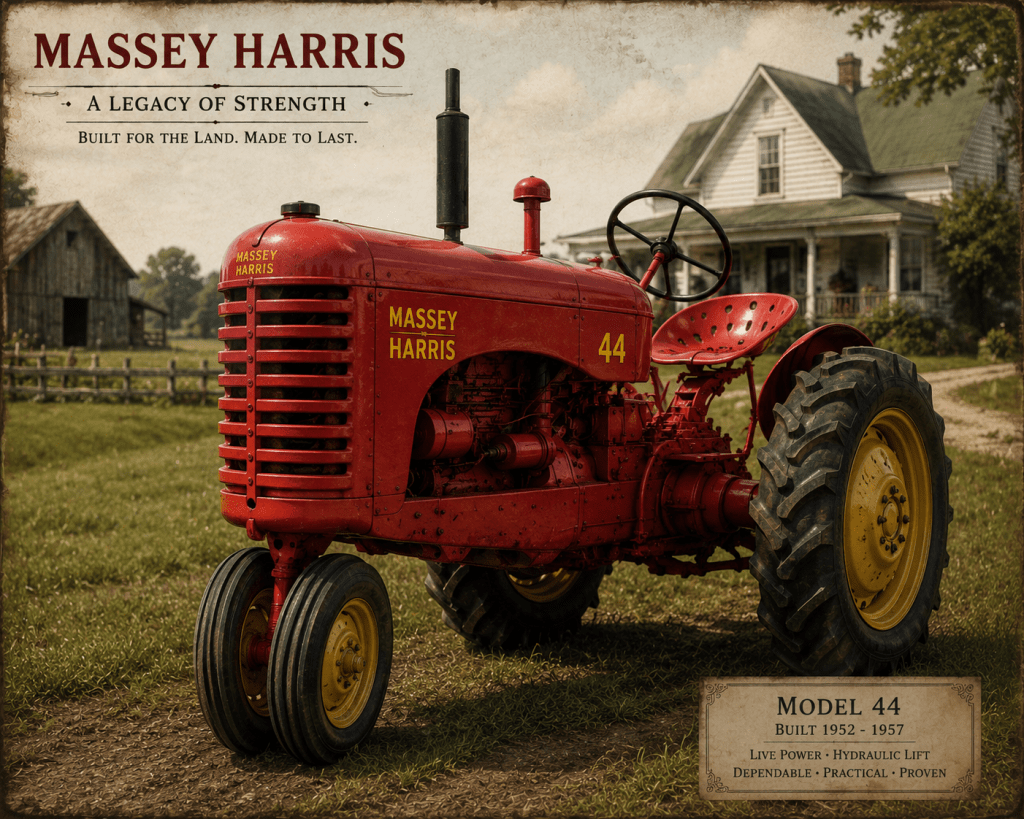

The engine of those tractors made a steady, rhythmic sound that couldn’t be mistaken for anything else.

I remember playing in the yard and listening to it. Knowing that Mom was in the kitchen, and being able to hear Dad working in the fields made me feel safe.

I liked hearing it, but after moving from the farm I never heard it again. As the years passed, I assumed I never would.

Until… One day, about thirty-five years later. I was standing in my kitchen with the windows open. I was home alone, and it was spring planting time.

Suddenly, I heard the distinctive put-put-put of that engine once again, and I was suddenly six years old again listening for my Dad working in the fields.

But this time it wasn’t Dad’s tractor. It was one that a neighbor had acquired.

For several years afterward, I welcomed the sound of that tractor every spring. For a few minutes I was transported back to a time of innocence long ago.

Ironically, Carl purchased another Massey-Harris tractor sometime in the 1980s to use for cutting and hauling firewood, but the engine was bad. He replaced it with the engine he took out of his 1969 Pontiac Firebird when he sent it to the scrap yard, but that is a story for another day.
The Cat at the Door

Our school scheduled a PTA meeting one cold and snowy winter night. My whole family would be attending, since Monty and I were now in the same school.

When we moved to Aledo, Monty and I began attending Frew School, a three-room country school not far from our house. In those days, before school districts consolidated and country schools disappeared, it was common to have several small country schools scattered throughout a district for farm families.

As an agricultural community, there were a lot of farm kids.

Mom helped us kids get ready while she and Dad were doing the same. They were both all dressed up — Dad in a sport coat and dress slacks, and Mom in a dress and high heels. Us kids wore clean school clothes.

Once Mom was satisfied that we were scrubbed, properly dressed, and didn’t have a hair out of place, it was time to leave.

There was about a foot of snow on the ground that night. Dad had scooped a path to the car earlier, since we didn’t have a garage.

He turned the outside light on as he went out ahead of us to warm up the car. Monty and I followed a few minutes later to give it time to warm.

The three of us were sitting in the car waiting for Mom to come out. When she did, she leaned over to pet the cat who was eating out of its bowl.

The “cat” looked up and hissed.

It wasn’t a cat. It was a possum.

It turned to look at her — and that’s when she realized two beady eyes were staring at her, attached to a face with a long pointed nose and rows of sharp teeth.

POSSUM! And the cat was nowhere to be found.

She went flying across the yard — in high heels — completely ignoring the path Dad had so thoughtfully dug, and made a new path of her own to the car.

By this time, Dad, Monty, and I were laughing, watching her mad rush to the car. Because the snow was deep and had a light crust on top, she had to lift her feet high with every step. It was a sight to see, for sure.

Breathless, she opened the car door and scrambled in, slamming it hard behind her.

We were still laughing. I’m not sure she appreciated it. She didn’t say much about it other than to tell us what happened. We could tell it really scared her.

Over the years, we brought this memory up occasionally. Time softened her sense of humor, and she could relate the story with a twinkle in her eye. She forgave us for laughing at her.

Funny thing is — we didn’t even own a cat. It belonged to the farm.

Moving Again: From Galva to Aledo

We stayed in Galva through Christmas of 1958. I remember the colored lights, and Mom letting me help put tinsel on the tree for the first time.

I turned seven a month later. Soon after that, it was time to move again.

I liked living in Galva a lot. It was different from the farm in a lot of ways.

City streets instead of gravel roads.

Walking to school. I loved school — especially learning to read. 

I had school friends to play with. Some lived close enough that I could walk to their houses after school.

Dad sold his milk trucks, and soon we were on our way. 

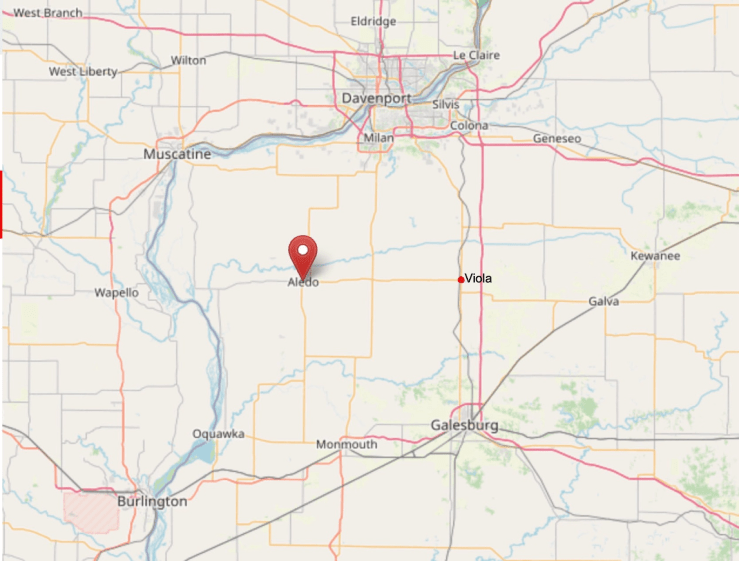
 We moved west again, this time just east of Aledo along Illinois Route 17. 

Our new home sat halfway between our old farm near Viola and where Mom had grown up, northwest of Aledo in Millersburg.

It is the same general area I had always lived in, except for the nine months or so we lived in Galva.

As much as I liked living in town, I was also glad to be back on the farm, even if it wasn’t the same farm. This time, Dad wasn’t farming. We moved into a tenant house next door to Nellie Briggs, the lady who owned the farm. Someone else farmed the land for her. 

Our little tenant house was much smaller than the stately white main house, but it was cute and very well kept. It had only two bedrooms, but we made it work with our bunk beds.

There was one thing about this house that worried me, though. The heat came from pipes in the walls, which I wasn’t used to. I thought the heat meant it could catch on fire, but Mom assured me it was safe. She said the house was heated by a system of water pipes in the walls. It was warmed by the coal furnace in the basement.

Just in case, though, I always had a backup plan — in case we ever did have a fire. I would smash the window next to my bed with Jocko, my teddy bear.

Fortunately, that plan was never needed. 

Not long after we moved into the tenant house near Aledo, Mom took me to register at Frew School.

The Turtle in the Truck

My parents grew up during the Great Depression. Dad grew up on a farm where it was common to eat what you could raise or hunt.

Mom, having grown up in the same era, understood this in a way we might find a little more difficult today. I know Dad brought her rabbit, squirrel, and occasionally had her cook him a mess of frog legs.

One day, when Mom was running the Kewanee milk route alone, she got quite a surprise when one of Dad’s “acquisitions” crawled out from under the seat of the milk truck.

The acquisition?

A soft-shelled turtle—that Dad had intended to make into turtle soup.

Since I wasn’t there and only heard the story later, I can only imagine the look on my mother’s face.

If I’ve given you the impression that she didn’t like animals, that’s not strictly true. She did—but mostly puppies and kittens. She didn’t like unwelcome surprises, and this one definitely qualified.

I don’t know whether she was driving when it happened or if she had already stopped at the next farm.

I only know that she got out of the truck and refused to get back in until the turtle was gone.

The farmer at the stop had to remove it for her. Mom wasn’t about to touch that turtle, and she made it very clear she wasn’t getting back into the truck until it was gone.

The farmer ended up with the turtle.

Dad missed having turtle soup—

…and so did the turtle.

No Brakes on Main Street

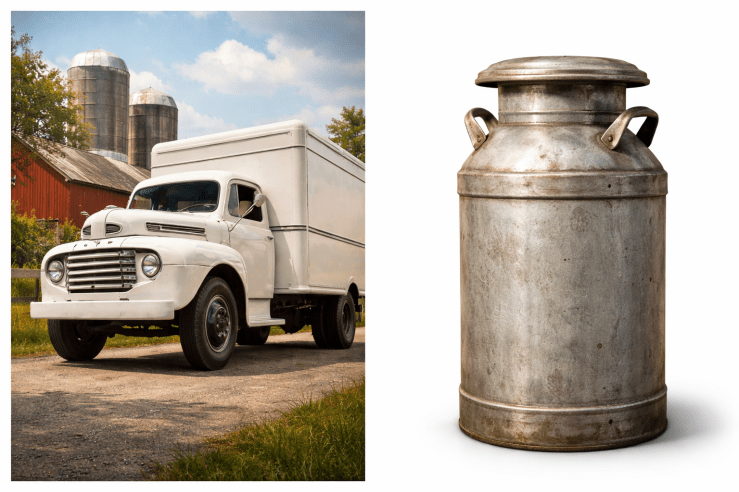
Mom was running the Kewanee milk route for Dad one day, picking up milk in big heavy cans and hauling them to the Galva Creamery Company. Dad had a deal worked out with the farmers so they loaded the cans for her. When Dad ran the route, he usually helped them.

Monty and I were with her that day. We had been singing songs like we usually did. Our favorites were The Marine’s Hymn and The Caissons Go Rolling Along.

Suddenly, Mom stopped singing and told us to get down on the floor. She didn’t shout, but we could tell by the tone of her voice that she meant business. We didn’t question it—we got down immediately.

We asked her what was wrong.

“The engine died,” she said. “When the engine dies, the air brakes don’t work.”

I had been looking through the windshield just before she told us to get down. We were a little less than halfway down a hill.

The light at the bottom of the hill turned red.

That meant the cross traffic had the right of way.

I remember seeing the cars sitting there at the intersection.

I’m guessing the drivers saw the crazy people in the big runaway milk truck coming down the hill a little too fast and decided it might be best to stay right where they were.

Mom gripped the big steering wheel and kept the truck pointed straight down the hill.

The truck was heavy with a full load of milk cans. Once it started downhill, there was no way to stop it without brakes.

My stomach did that flip-flop thing it does when you go down a hill too fast. Usually it made me laugh.

This time it didn’t.

It all happened so fast. We made it through the stoplight without mishap. We were still rolling, but Mom finally got the engine started again and pulled off to the side of the highway.

We waited there for a few minutes. Then Mom pulled back into traffic and continued on to the creamery in Galva.

I was only six years old, but that is something I will never forget.

First Grade

Around the time I first started school, I went shopping with Mom, Dad, and Monty for school supplies. I was so excited! I remembered the years when my brother went to school and I had to stay behind. Now I would never be left behind again.

When we got to the store, it was decided that Dad would help me pick out my supplies while Mom helped Monty. When everything had been chosen, Dad paid for the supplies. He was still carrying my tablet under his arm.

We left the store and had only gone a few feet when I heard him say, “Oh, no! I forgot to pay for the tablet.”

Without another word, he turned around and went back into the store — still clutching it to his chest — and apologized to the clerk for the mistake.

The only real experience I had with school before starting myself was the day I went with my brother — a memory I’ve written about before.

I can’t remember the exact first day of school. What I do remember is the school and the classroom itself.

The school was a tall, square building made of dark brick. It stood exactly one block from home. I couldn’t guess what school would be like, but I was anxious to find out.

I remember the inside of my classroom — from the wall of windows where the light filtered through the oak trees outside, to the crayon color chart on the wall with the names of each color printed in bold lettering. I remember my cubby, too. We each had one with our name printed on it to keep our nap rugs in.

We would move again before the end of the school year, but this is where I met Dick and Jane, Baby Sally and their pets, Spot and Puff. It is also where I learned that colors had names that I could write and someone else could read — and that classical music could make a child sit still and listen… and imagine.

Never Far From Home

From the summer before I started school, until the spring of my third grade year, I attended five different schools.

One place we stayed a couple of years. Three others we stayed a very short time, hardly more than a few months. In the third grade alone, I attended four different schools. I never questioned why until much later in life, when it was too late to ask anyone.

We moved from the farm, near Viola, Illinois, to Galva, Illinois, 30 miles to the east. There I started school in 1958. 

By the spring of the next year, we moved back to the Viola area, near Aledo, Illinois. I finished first grade here, attended all of second grade, but before Christmas of the third grade, we moved again, this time 44 miles west to Burlington, Iowa. I was disappointed because I had a part in the upcoming Christmas play.

I remember we spent Christmas in Burlington, but we moved again shortly after, this time 72 miles northeast to Rock Island, Illinois.

We didn’t stay long in Rock Island, either, and by spring we moved again. Our move this time took us back to my mother‘s childhood home in the small village of Millersburg, Illinois, 7 miles northwest of Aledo. 

There I would live for more than 40 years.

If you wonder why I mention the distances between towns, it is to show that we were never far from Aledo, where I was born in Mercer County Hospital in 1952 — the same hospital where my own children would be born years later. We never strayed far from our roots or our families.

My parents are gone now, so I can’t ask them why we moved so often during those three years. With the moves came job changes for Dad.

Looking back, I understand more than I did then. Those were hard years in the Midwest. Jobs weren’t always steady, and people took work wherever they could find it.

But as a child, I didn’t see any of that.

Both Mom and Dad were very hard workers — and my dad always had a job. If one ended, another one soon followed. We never went without anything. If things were tough for them, they never let us feel it.

All I knew was that we kept moving…

and somehow, we were never very far from home.

Halt! Who Goes There?

A Dad Story

As a Private First Class during World War II, my Dad wore many hats — machine gunner, chauffeur, guard — pretty much whatever his commanding officer told him to do. 

After the Allies secured many of the artifacts that had been spirited away by The Third Reich, this one particular day found Dad and a fellow soldier in a salt mine guarding a large number of priceless paintings. 

They heard people entering the mine. It became obvious to them at once who it was, but Dad whispered to the other guard, “Watch this!”

On alert and without another word, he shouldered his rifle and pointed it at the person leading the procession. 

“Halt! Who goes there?” Dad called out as was their protocol. “Identify yourself.”

The leader of the procession stopped — and so did the people following him. 

He saluted the two soldiers and said, “Allied Commander General Dwight D. Eisenhower. At ease.” 

They immediately complied. General Eisenhower walked up to Dad and shook his hand. “Well done, soldier,” he said.

Dad told that story many times over the years, always laughing and adding a shake of his head at the end — remembering the time he pulled his rifle and pointed it at General Dwight D. Eisenhower — later the 34th President of the United States.  

The Little Green Basket

I have always liked baskets — or virtually anything I can put treasures in. That all started when I was a little girl.

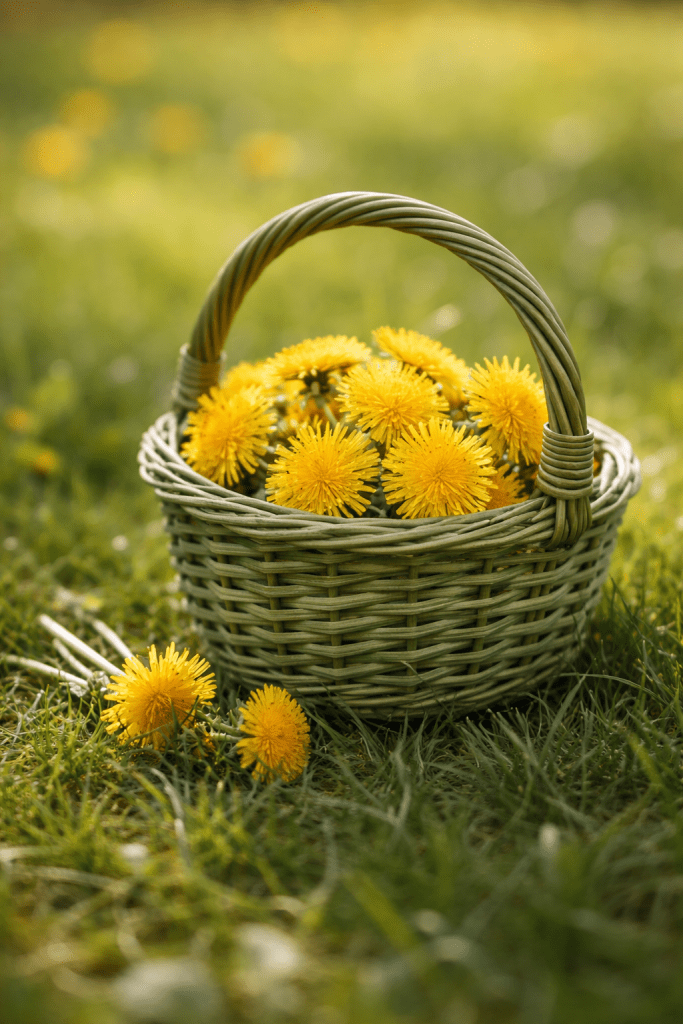
Mom gave me a small green wicker basket. Sometimes I went to the barn to gather eggs when Dad was out there, because our chickens free-ranged and liked to hang out in the hayloft. Finding their eggs was often something of an exploration, and I would usually come back with only a handful.

Other times — especially in spring or summer — I took great delight in bringing Mom baskets of dandelions, though they were usually half-closed by the time I made it back to the house.

I wasn’t allowed to roam the whole farm, nor would I have wanted to. But as long as I stayed in the yard or the adjacent barnyard, my exploring had no real limits. Sometimes I visited the rabbits in the pens Dad kept beside the barn.

By the time I brought my basket home, the dandelions had left their yellow dust on my fingers — and on my nose.

Dad used to laugh and say it was obvious I liked butter.

The China He Carried Home


A Young Soldier, a Promise, and a Truckload of Coal

Dad served in the European theater in World War II.

For a time, he was stationed in the Black Forest in Germany.

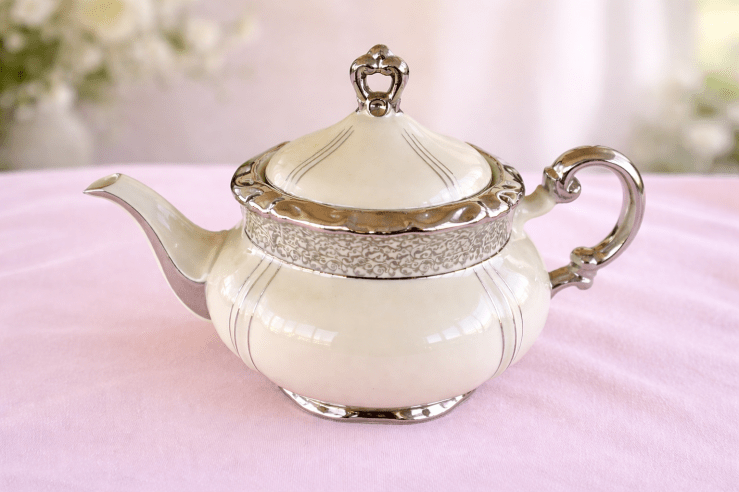
One day, while off duty, he discovered a small china shop. Inside, an elderly proprietor made and sold delicate white dishes, complete with tea and coffee services. Dad admired them. More than that — he already knew exactly who they were for.

He asked what it would cost for two full sets. One for his mother. One for the woman he hoped to marry someday.

The old man shook his head sadly. He had no coal to fire his kiln. Wartime shortages made it impossible.

Dad asked a simple question.

“If I bring you the coal, will you make them?”

The old man agreed. A deal was struck.

Along with his other duties, Dad sometimes drove officers from place to place. That meant he had access to the motor pool. He put his plan into motion.

Later, with a grin, Dad told me he had “borrowed an Army truck and liberated a truckload of Army coal.”

Then he laughed — because he always did at that part.

Not long afterward, two beautiful sets of white china with silver trim were finished.

One went to his mother.

Two years later, when he married mine, he placed the second set in her hands.

Today, that china sits in my care.

A quiet reminder of love, war, and a young soldier who knew exactly what mattered.