I Gave My Dog Tonsillitis

I was always susceptible to common childhood illnesses, such as strep throat, tonsillitis, and earaches. 

When I was twelve, I developed tonsillitis again. My doctor decided that it was finally time to take my tonsils out. He and Mom scheduled the surgery, but it was scheduled far enough ahead that I would have time to heal. He prescribed an antibiotic and we went home after Mom got the prescription filled.

I don’t remember exactly what time of year it was, but I think it was summer. I don’t remember having makeup school work. And since I was sick, Mom wouldn’t let me go outside. 

So, I was stuck in the house with only TV and my dog, Spunky, to keep me company. 

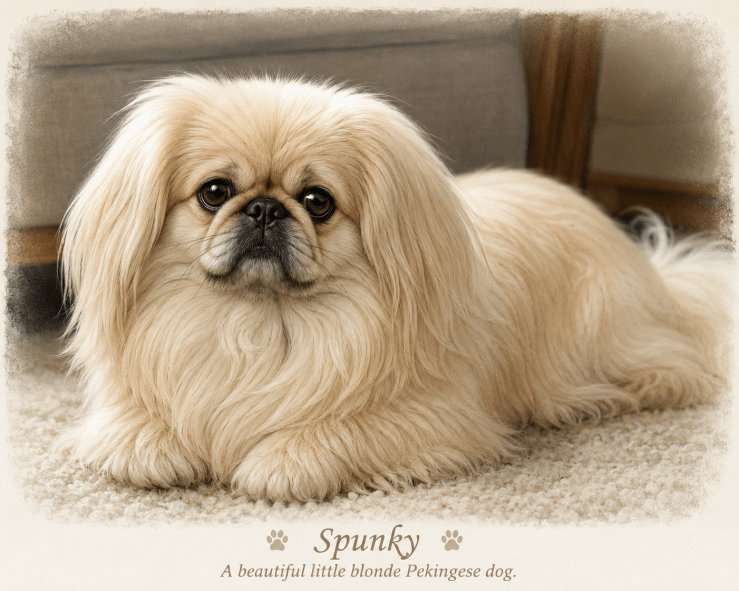
Spunky was a beautiful little blonde Pekingese dog with a sweet disposition and a strong preference for being wherever I happened to be.
Although he belonged to the whole family, Dad worked, Mom was busy taking care of us and the house, and my big brother was sixteen by then so he preferred to spend his time with his friends rather than his kid sister and the dog. 

But, that was okay. Spunky and I enjoyed each other’s company. 

A few days after I got sick, we began noticing that Spunky wasn’t acting like himself. He was lethargic and was barely eating. 

After a few days, Mom said he needed to go see Dr. Beer, our vet. I was well by then, so I went with her. 

After examining Spunky, Dr. Beer said he had tonsillitis. 

Mom and I looked at each other in surprise. 

That’s when Mom explained that I had just gotten over it. 

Dr. Beer said that he caught it from me—and that’s what I have believed all these years.

He rarely left my side. We were up in each other’s faces all the time. I used to kiss him on the mouth, and I’d been known to share occasional lollipops and Popsicles with him. And Mom had bought me some Popsicles while I was sick with tonsillitis…  

All these years later, I started wondering if it was really possible. I did some research and found that although it is rare, it can happen with bacterial tonsillitis. 

They specifically advised to avoid face kissing. 

Oops. 

I suspect it was probably frowned upon to share Popsicles and lollipops, too. 

At least Spunky didn’t have to have his tonsils out.
The Cat at the Door

Our school scheduled a PTA meeting one cold and snowy winter night. My whole family would be attending, since Monty and I were now in the same school.

When we moved to Aledo, Monty and I began attending Frew School, a three-room country school not far from our house. In those days, before school districts consolidated and country schools disappeared, it was common to have several small country schools scattered throughout a district for farm families.

As an agricultural community, there were a lot of farm kids.

Mom helped us kids get ready while she and Dad were doing the same. They were both all dressed up — Dad in a sport coat and dress slacks, and Mom in a dress and high heels. Us kids wore clean school clothes.

Once Mom was satisfied that we were scrubbed, properly dressed, and didn’t have a hair out of place, it was time to leave.

There was about a foot of snow on the ground that night. Dad had scooped a path to the car earlier, since we didn’t have a garage.

He turned the outside light on as he went out ahead of us to warm up the car. Monty and I followed a few minutes later to give it time to warm.

The three of us were sitting in the car waiting for Mom to come out. When she did, she leaned over to pet the cat who was eating out of its bowl.

The “cat” looked up and hissed.

It wasn’t a cat. It was a possum.

It turned to look at her — and that’s when she realized two beady eyes were staring at her, attached to a face with a long pointed nose and rows of sharp teeth.

POSSUM! And the cat was nowhere to be found.

She went flying across the yard — in high heels — completely ignoring the path Dad had so thoughtfully dug, and made a new path of her own to the car.

By this time, Dad, Monty, and I were laughing, watching her mad rush to the car. Because the snow was deep and had a light crust on top, she had to lift her feet high with every step. It was a sight to see, for sure.

Breathless, she opened the car door and scrambled in, slamming it hard behind her.

We were still laughing. I’m not sure she appreciated it. She didn’t say much about it other than to tell us what happened. We could tell it really scared her.

Over the years, we brought this memory up occasionally. Time softened her sense of humor, and she could relate the story with a twinkle in her eye. She forgave us for laughing at her.

Funny thing is — we didn’t even own a cat. It belonged to the farm.

Frew School

I remember the day Mom registered me for school clearly.

I stood behind her while she talked with my teacher, Mrs. Clawson. After Mom left, Mrs. Clawson showed me into the classroom and gave me an empty desk.

The school had three classrooms and six grades, so there were two grades in each one. Mrs. Clawson taught first and second grade. Miss Nesbitt taught third and fourth grades. Mrs. Dahl taught fifth and sixth grades. Each classroom had its own area for us to hang our coats and store our boots.

The classrooms were all lined up in a row on the east side of the building. My classroom was the first one inside the front door, then the middle grades, and finally the upper grades.

The other side of the building housed the bathrooms, the lunchroom, and the kitchen.

Sometimes the tables and chairs would be folded up, giving us an open space for activities. I especially remember the times when the record player came out. Mrs. Johnston visited once a week to teach music, and I think that may have been when we learned the bunny hop. I can still picture us hopping around the room in a circle with our hands on each other’s shoulders as the music played.

I settled quickly into the new school. I liked my teacher and the other kids. There were swings on the playground, and I especially liked playing hopscotch on the cement entrance to the school with the other girls during recess.

Dad found a new job right away. He said he was a Fuller Brush Man. I didn’t know what he did at first. He said he went door-to-door selling things. He showed me the case he carried with him and all the things inside it. Some of them were pretty interesting.

We lived down a long driveway. Across the highway was another long driveway with a farm at the end. That is where my friend JoAnn lived.

We stayed there longer than we had in Galva, and before long it felt like home.

Moving Again: From Galva to Aledo

We stayed in Galva through Christmas of 1958. I remember the colored lights, and Mom letting me help put tinsel on the tree for the first time.

I turned seven a month later. Soon after that, it was time to move again.

I liked living in Galva a lot. It was different from the farm in a lot of ways.

City streets instead of gravel roads.

Walking to school. I loved school — especially learning to read. 

I had school friends to play with. Some lived close enough that I could walk to their houses after school.

Dad sold his milk trucks, and soon we were on our way. 

 We moved west again, this time just east of Aledo along Illinois Route 17. 

Our new home sat halfway between our old farm near Viola and where Mom had grown up, northwest of Aledo in Millersburg.

It is the same general area I had always lived in, except for the nine months or so we lived in Galva.

As much as I liked living in town, I was also glad to be back on the farm, even if it wasn’t the same farm. This time, Dad wasn’t farming. We moved into a tenant house next door to Nellie Briggs, the lady who owned the farm. Someone else farmed the land for her. 

Our little tenant house was much smaller than the stately white main house, but it was cute and very well kept. It had only two bedrooms, but we made it work with our bunk beds.

There was one thing about this house that worried me, though. The heat came from pipes in the walls, which I wasn’t used to. I thought the heat meant it could catch on fire, but Mom assured me it was safe. She said the house was heated by a system of water pipes in the walls. It was warmed by the coal furnace in the basement.

Just in case, though, I always had a backup plan — in case we ever did have a fire. I would smash the window next to my bed with Jocko, my teddy bear.

Fortunately, that plan was never needed. 

Not long after we moved into the tenant house near Aledo, Mom took me to register at Frew School.

Mom’s Four Day Make Ahead Cake

Mom was born at home on June 3, 1928—though Mercer County recorded it as June 2. Grandma always said the county was wrong. The reason, as I was told years ago and had almost forgotten, is that Grandma went into labor on June 2 but didn’t deliver until after midnight. So the county may have written down when it started… but we go by when she actually arrived. June 3 it is.

In honor of my mom’s birthday, I am sharing her favorite cake recipe, told exactly in her own words. 

She brought this cake to all of our family picnics, and there was never a single piece left over. Many have asked for her recipe over the years. 

Family members were always quick to ask if she had brought their favorite cake. She never disappointed. I think she would like knowing others can now enjoy it, too.

I’ve kept her wording exactly as she wrote it, including her name attached to the recipe. 

It feels right to share this today, as it would have been her 98th birthday.

I hope you love it as much as we always did. 

Four-Day Make Ahead Cake. (Elaine Stegall)

This is a wonderful cake that is so easy to make and one of my favorites. You can make the cake on Wednesday and take it on a picnic or anywhere else on Sunday! I like the convenience of being able to make it days ahead of time! If I have had some left over it has even lasted a week and is still delicious. This is a cake that MUST be kept refrigerated. 

CAKE:

1-18 oz. pkg. Devil’s food cake mix

1 cup water

1/3 cup oil

3 eggs

FILLING AND TOPPING:

2 cups or 16 oz. carton of dairy sour cream

1 cup sugar

3 cups of coconut

8 oz. container frozen Cool Whip…thawed or 3½  cups

Heat oven to 350 degrees F. Grease and flour two 8″ round cake pans. In a large bowl, blend all cake ingredients at low speed until moistened. Beat for 2 minutes at highest speed and pour into prepared pans. Bake for 30 to 35 minutes until cake is done in the middle. Cool cake in pans for 15 minutes … then turn out on to cooling racks or onto waxed paper until completely cool. Then split each layer in half with a piece of thread or dental floss and set aside. Separate layers onto four waxed papers or the cooling racks.

In a large bowl, combine sour cream and sugar. Gently FOLD in coconut and whipped topping. Fill and frost layers just as you would any cake. Garnish as desired. Store in a cake safe in the refrigerator. Enjoy!

Tweety Bird

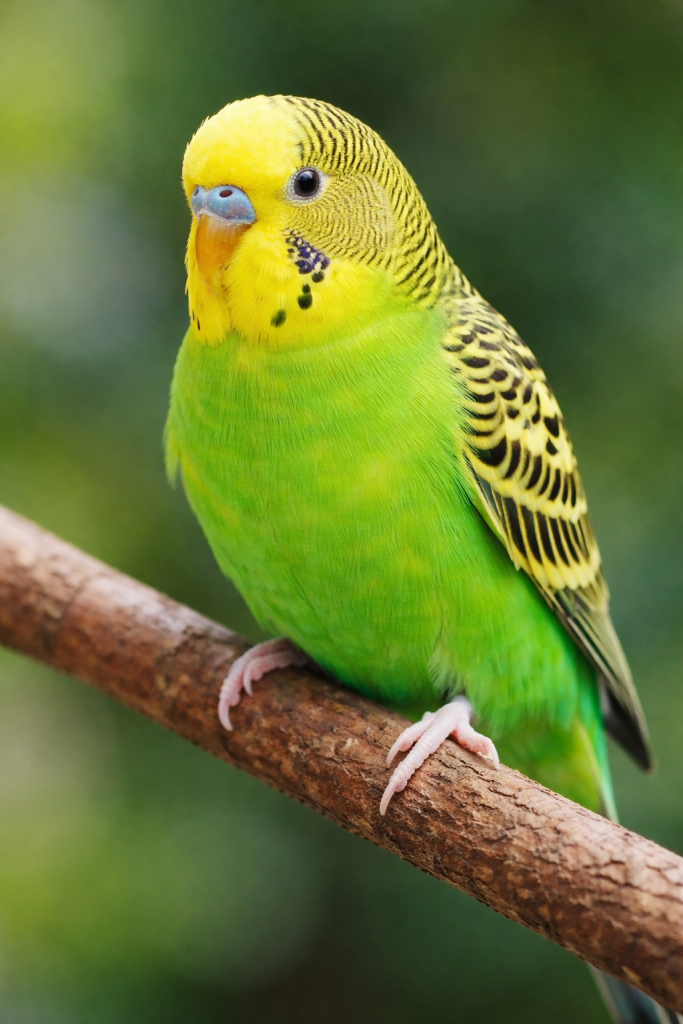
My paternal great-grandmother raised parakeets.

Tweety Bird…Not the original, but they look alike.

Whenever we went to her house, I would stand beside the bird cage and watch them. They fascinated me. It was the only time I ever got to observe birds up close.

One day, Grandma ‘Rene — her name was Irene, but everyone in the family called her Grandma ‘Rene — asked Monty and me if we would like to take one home.

Of course we said yes! We were so excited.

Given Mom’s slight aversion to birds, she was less enthused, but she allowed it.

Grandma gave us a cage, and we took him home.

Monty and I named him Tweety Bird after the cartoon character.

Cleaning the cage fell to Mom. She was an excellent housekeeper, so she cleaned it often. When the weather was nice, she took the cage outside and cleaned it on the sidewalk.

The last time she cleaned it… was the last time she cleaned it.

She had set the cage down on the sidewalk and slid the removable bottom out so she could clean it properly.

Unfortunately, she forgot to slide it back in before she picked up the cage.

Before she could react, Tweety Bird saw his opportunity — and he was a caged bird no more.

Mom said he flew up into the tree by the back door, but there was no way she could catch him.

He soon flew away, never to be seen again.

I think she felt bad when she had to tell us what happened when we came home from school.

We knew it was an accident, and she really did feel bad — but we couldn’t resist teasing her that we thought she did it on purpose because we knew she wasn’t fond of birds.

The Turtle in the Truck

My parents grew up during the Great Depression. Dad grew up on a farm where it was common to eat what you could raise or hunt.

Mom, having grown up in the same era, understood this in a way we might find a little more difficult today. I know Dad brought her rabbit, squirrel, and occasionally had her cook him a mess of frog legs.

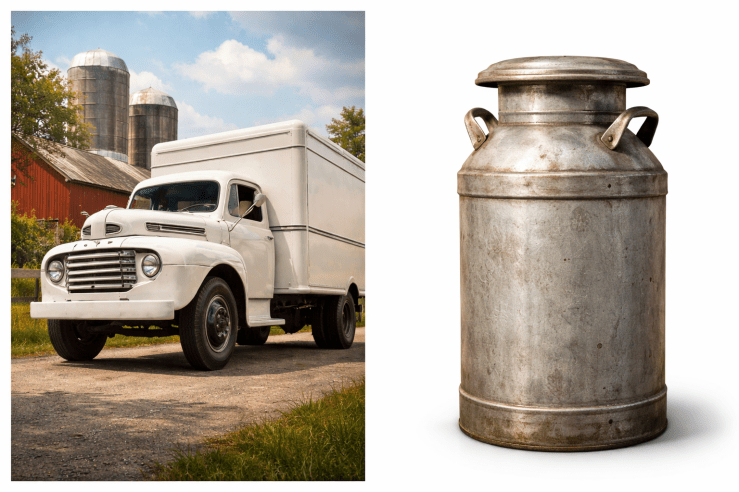
One day, when Mom was running the Kewanee milk route alone, she got quite a surprise when one of Dad’s “acquisitions” crawled out from under the seat of the milk truck.

The acquisition?

A soft-shelled turtle—that Dad had intended to make into turtle soup.

Since I wasn’t there and only heard the story later, I can only imagine the look on my mother’s face.

If I’ve given you the impression that she didn’t like animals, that’s not strictly true. She did—but mostly puppies and kittens. She didn’t like unwelcome surprises, and this one definitely qualified.

I don’t know whether she was driving when it happened or if she had already stopped at the next farm.

I only know that she got out of the truck and refused to get back in until the turtle was gone.

The farmer at the stop had to remove it for her. Mom wasn’t about to touch that turtle, and she made it very clear she wasn’t getting back into the truck until it was gone.

The farmer ended up with the turtle.

Dad missed having turtle soup—

…and so did the turtle.

The Lawn Chair Incident

In the summer and on Saturdays, my brother and I usually went with Mom when she ran the milk route for Dad.

It wasn’t unusual for them to stop for a little while to chat with the people they had become friends with, although they couldn’t stay long because the milk trucks in those days were not refrigerated.

One afternoon, Mom stopped to visit with a farmer and his wife. She went inside the house, but Monty and I stayed outdoors.

It was a beautiful day—warm, with blue skies and plenty of sunshine. We decided to sit in the folding lawn chairs under a shade tree.

I don’t remember what we were talking about, but Monty sat in his chair with his long legs touching the ground. My legs were much shorter, so I sat on the edge of the chair, swinging my feet.

That’s when disaster struck.

My position on the chair and the motion of swinging my feet caused it to fold up—catching my ring finger on my right hand between two pieces of metal. My weight pressed down hard on my smashed finger.

I started screaming at the top of my lungs.

Monty ran to get Mom, but he didn’t make it as far as the house before all three adults came tearing out and rushed to my side.

The farmer tried to unfold the chair, but he couldn’t. He grabbed some tools to take it apart, but he became frantic—probably because I was still screaming.

He partially took the chair apart… and partially ripped it apart.

I heard Mom say something about not ruining his chair, and he said he didn’t care. There were some curse words in there too, but I don’t remember what they were.

The only choice was to take me to the hospital.

Since Mom’s only transportation was the milk truck, the farmer bundled us into his car after his wife gave Mom a white cotton dish towel to wrap around my finger.

The only access to the highway to Hammond-Henry Hospital in Kewanee was a narrow gravel road with long, steep hills.

The farmer was in a hurry, so he drove as fast as he safely could.

I had stopped screaming once my finger was released from the chair, but now I was sobbing.

I sobbed all the way up the first hill…

…and laughed all the way down it.

The sudden drop always made me laugh.

As soon as we started up the next hill, I cried again—then laughed all the way down.

I think there were three hills in all, and it happened every time.

When we finally ran out of hills, I cried all the way to the hospital.

Fortunately, my finger wasn’t broken. The doctor bandaged it and sent me home.

After taking us back, Mom finished the milk route, although I don’t remember the rest of it.

It didn’t take long for me to realize that if I let my arm drop to my side, my finger started to throb—so I held it close to my chest for the rest of the afternoon.

When we got home, Mom made a sling for me out of a dish towel.

I was pretty proud of that sling.

To this day, that same finger is still slightly smaller than the ring finger on my left hand. It’s less noticeable now, and I doubt anyone else would see it…

…but I do.

Because I know what caused it.

Transitions

I didn’t expect much from today when I woke up this morning. The only thing on my agenda was to catch up on some laundry.

My day starts off like usual… feed the dog, feed myself, dispense meds, and get started.

After Gracie, my fifteen-year-old Shih Tzu, and I eat breakfast, I load the dishwasher and tackle the laundry.

I have way too many clothes—a result of gaining control of my diabetes and losing weight. I now have two sizes of clothes: what I wore before, and what I can wear now.

I am sorting through the larger clothes so I can pass them along, keeping a few oversized T-shirts because they’re comfortable. They also make great work shirts.

We’re in that in-between stretch where the seasons can’t quite make up their minds, so I’m trying to put my winter clothes away. That can get tricky here in the Midwest. Just when it feels like spring has settled in, winter rushes back and says, “Not so fast.”

I am packing the clothes I can no longer wear so I can pass them along. The winter clothes I still wear will go into storage—soon, once I’m sure Mother Nature is finished playing seasonal roulette with the weather.

But it’s not just about the clothes. It’s the space they take up—and what they represent.

The same is true for so many other things in my house.

I’m transitioning my office from designer Brenda to writer Brenda.

There are still too many pots and pans and small appliances in my kitchen—more than I need now. My family is smaller, and I don’t cook the way I used to when Carl and all four children were here.

I don’t need all of this anymore. I’m still figuring out what stays—and what it means to let the rest go.

No Brakes on Main Street

Mom was running the Kewanee milk route for Dad one day, picking up milk in big heavy cans and hauling them to the Galva Creamery Company. Dad had a deal worked out with the farmers so they loaded the cans for her. When Dad ran the route, he usually helped them.

Monty and I were with her that day. We had been singing songs like we usually did. Our favorites were The Marine’s Hymn and The Caissons Go Rolling Along.

Suddenly, Mom stopped singing and told us to get down on the floor. She didn’t shout, but we could tell by the tone of her voice that she meant business. We didn’t question it—we got down immediately.

We asked her what was wrong.

“The engine died,” she said. “When the engine dies, the air brakes don’t work.”

I had been looking through the windshield just before she told us to get down. We were a little less than halfway down a hill.

The light at the bottom of the hill turned red.

That meant the cross traffic had the right of way.

I remember seeing the cars sitting there at the intersection.

I’m guessing the drivers saw the crazy people in the big runaway milk truck coming down the hill a little too fast and decided it might be best to stay right where they were.

Mom gripped the big steering wheel and kept the truck pointed straight down the hill.

The truck was heavy with a full load of milk cans. Once it started downhill, there was no way to stop it without brakes.

My stomach did that flip-flop thing it does when you go down a hill too fast. Usually it made me laugh.

This time it didn’t.

It all happened so fast. We made it through the stoplight without mishap. We were still rolling, but Mom finally got the engine started again and pulled off to the side of the highway.

We waited there for a few minutes. Then Mom pulled back into traffic and continued on to the creamery in Galva.

I was only six years old, but that is something I will never forget.